Ep21 Bárbara Espina—The Crisis Nobody Plans For: Spiritual Emergency Response, Ethics, and Holding Space
What happens when a plant medicine ceremony goes sideways... and there's no one trained to help?
That's the gap Bárbara Espina decided to fill.
In this episode of Inner Source, Dr. Sandra Dreisbach sits down with Bárbara — a psychologist, plant medicine practitioner, and co-founder of CERT (Spiritual Emergency Response Team) — calling in from the Sacred Valley of Peru, where she's spent over a decade doing work most people don't even know exists.
Bárbara shares how CERT came to life not from a polished plan, but from watching crisis after crisis unfold with no real infrastructure to catch the people falling. She walks through what spiritual emergency actually looks like in practice — how it differs from clinical crisis, why context changes absolutely everything, and what real-time response looks like when someone's documentation is missing, the language barrier is real, and the person in front of you is somewhere far from their ordinary mind.
Dr. Sandra brings her own thread into the conversation — specifically around the invisible architecture of transformation, the power of conscious storytelling, and why making the unconscious visible isn't just philosophical. It's the foundation of ethical facilitation. She also shares how tools like the Thyrsus Oracle Deck grew directly from her own process of making those invisible inner threads something she could actually see, hold, and work with.
Together, they pull back the curtain on something the plant medicine space rarely discusses openly: the facilitator's own experience. The harm they sometimes absorb. The things they don't say. The quiet isolation of holding space for everyone else while having nowhere safe to land themselves.
By the time this episode is over, you'll know how to:
→ Recognize the difference between a genuine spiritual emergency and a clinical psychiatric crisis — and why getting that distinction wrong can cause serious harm
→ Prepare before traveling to a plant medicine hub like the Sacred Valley, including what to have in place before anything goes wrong
→ Identify the subtle ways infantilizing ceremony participants works directly against their transformation — and strips away the very agency that healing depends on
→ Hold the boundary of non-harm for yourself as a practitioner, not only for the people in your care
→ Find or build the kind of community support structure that's honest, sustainable, and free from the usual pressures of your regular professional circle
Bárbara also opens up about her upcoming retreat, Wisdom of the Holders — a gathering built specifically for plant medicine facilitators who are ready to be seen, supported, and held... for once.
If you hold space for others in any capacity — whether professionally or personally — this conversation will change how you think about what sustainable, ethical care actually requires.
Bárbara Espina 0:00
That brings me to this topic, which has to do with infantilizing participants. And if
Dr. Sandra Dreisbach 0:04
people do infantilize, they're taking a patriarchal role. You need to be able to empower yourself through a transformative process. You cannot ride in the back seat of your own transformation. Welcome to inner source. I'm Dr Sandra Dreisbach, whether you're just beginning to explore your inner landscape or you've been doing this work for years and understand that transformation is a lifelong journey. This is your space. We're diving into real conversations about personal growth, Shadow Work, and what it actually takes to create lasting change from the inside out, because the truth your most powerful healing tool isn't out there somewhere, it's already within you. Let's connect to that inner source together.
Speaker 1 0:54
The information shared on this podcast, our website and other platforms may be triggering for some viewers and readers, and readers and is for informational, educational and entertainment purposes only. It is not a substitute for professional medical, legal or therapeutic advice. While we explore topics related to altered states of consciousness, we do not endorse or encourage illegal activities or substance use. Always research your local laws and consult qualified professionals for guidance. The content provided is as is, and we are not liable for any actions taken based on the information shared. Stay supported and informed. Act responsibly and enjoy the podcast. In this episode
Dr. Sandra Dreisbach 1:27
of inner source, I talk with Barbara Espina, who is calling in from the Sacred Valley of Peru, and she has a decade of experience in the field of plant medicine and psychedelic care, supporting first participants, practitioners and communities. She is an integration specialist, but she's also a psychologist and a plant medicine practitioner and educator. She is the co founder and director of cert, which is spiritual emergency response team. And in this conversation, you'll get to hear a little bit about our relationship, about our upcoming retreat, and all full transparency, but this is part of the purpose here is to see how do we both journey in this space together, and to be transparent about these processes. But I hope you'll also gain some positive insights to integration into the experience of addressing spiritual emergencies and the importance of supporting that type of care in community, and also what it takes to build a positive retreat experience from her background and and her experience as both a psychologist, a plant medicine facilitator, educator and supporter of people in these journey experiences and also working in conscious relationship. So I hope you enjoy this episode. You Well, welcome Barbara to inner source. I'm so happy to see you. Maybe you want to tell us a little bit more about yourself and about you know, where are you in the world right now?
Bárbara Espina 3:14
Well, I'm in Peru, in the Sacred Valley, Peru, amongst the Andean mountains. Here, beautiful. I've been here for a few years now, like over three years now. So this is where I'm based. Then I travel. I go here and there, but this is where I'm based. This is home. What work are you doing there? So I'm a psychologist and I'm also a plant medicine practitioner. I mean, there's so many terms to speak of this kind of role, but I have supported in ceremony. I also support with integration. So there's a few bits and pieces that I do around plant medicine, always supporting people, also crisis response. So I call myself a plant medicine practitioner, because of that being a bit like inclusive with all the things that I do. And yeah, I was doing this back in Europe, and then at some point, I felt the calling to come here, to the to the Andes and to the jungle, to the Amazon, and here I remain. Something was here for me, and here I am. Happy, happy, happy to live here now. And where are you from? Originally? I'm originally from Spain, and then I lived in the UK for a few years. I spent a few years over there, at times actually living there, and sometimes just coming and going. And then I travel a little bit until I landed here. And funnily enough, I speak Spanish. That's my mother tongue, but I spend 70% of my time here speaking in English. So I basically live in English around here, because of the community as well. There's so many foreigners where I am, so this has become kind of the main language, which is a bit sad. I think
Dr. Sandra Dreisbach 4:46
there's a whole conversation we can have just on that alone. And I know you and I met each other being part of the I series integration training, and now we first came into a relationship, but we've also had a relationship in other. Ways and and I would love for you to share about the crisis clinic that you you're building and CO building, so that more people can hear about that part of your work.
Bárbara Espina 5:13
Yeah, so the project that I coordinate, it's called cert, which is an acronym, and it stands for spiritual emergency response team. And the whole project is, on its own, a response to things that kept happening here. People kept, as we say, like, like, they're they're living their lives. They're living out their their journey, their stories. But then they come to the valley and they kind of fall off their horse, and we just help them back on their horse, stabilize them enough to for them to continue on the journey, right? So we're not like a therapeutic service. We are supporting them in that way. These cases have kept happening over the years, and I found myself either witnessing them or actually involved in supporting them. But then I see that nothing really gets built in between cases, there's no sustainable structure or the we're aiming to become that, right, the whole team. But that wasn't the case. Like there wasn't, there wasn't anything being built to support that, so that as we go, we learn how to do it better, how to make it sustainable. So it really came down to people being available and having the heart to help. And sometimes that can be enough, but at the same time, you know that isn't fair to anyone really, especially to the person who's in crisis and could really need some specialized support, right? So this is what we offer. We offer specialized support in a situation of crisis specifically related to like spiritual and psychedelic practices, yeah, so that people are not just absolutely unequipped, you know, like there's someone there who knows how to hold that space, who builds also working relationships with the authorities here, with international bodies, with, you know, is there's actually quite a lot of coordination, rather than, like therapeutic support, as such, it is community rooted, meaning that even though we help the individual in question, and of course, the whole team, they bring with them, you know, like maybe the emergency contact, maybe relatives partners, maybe the retreat center facilitators, who also need a bit of support, we help them, but also that happens within the community, and there are relationships in the community and the situations have an impact in the community. So we we do not exist in spite of the community, but within the community. And we also offer, in this way community care to bring in a bit more safety awareness, and so that we know that you know when things happen, there is a network that that is built for this, and not just like suddenly, spontaneously happening and not knowing really
Dr. Sandra Dreisbach 7:44
what to do. I have such a heart for the work that you're doing there, and cheers to you for taking the time, energy and effort and community to start trying to build that as a resource for people, including for people that you know. I'm sure, I know a lot of people talk about spiritual emergence or spiritual emergencies, and there's different definitions of it, but, but how would you personally define it?
Bárbara Espina 8:10
We do have our own academic references of spiritual emergency. You know, I'm speaking of me coordinating this, but really it's, it's been co funded by my dear friend and colleague, Fernanda Bara, who runs cert with me as well. But yeah, we both come from from a background of wanting to better understand spiritual emergencies as well, out of our own experience, and then when helping people and the the many shapes a so called spiritual emergency can can take, right? So, you know, if we go back to the graphs, then that would be an awareness around how between in a classical kind of psychiatric way, the difference between, like a classical psychotic break and so called spiritual emergency, which has to do with not pathologizing that openness, but actually helping people along in that open that yeah, I'm breaking open as Jules Evans, right? Like breaking open to into a new reality, into a new normal that one needs to understand within, in the body, in our relationships with the world, with a regular life that is going to be changing, because there's something very strong working through us that just drives us in different way and and it requires some specialized professional support, right? Actually, the Croft spoke of spiritual emergence and spiritual emergency. And the difference is that, you know, over the years, it's a human condition to go through spiritual openings. Transformation is normal.
Dr. Sandra Dreisbach 9:35
Exactly. Inner transformation is something we all experience as a part of our lives, right? And I'm definitely familiar with Croft work around, you know, and defining, at least for you know, what, what's a psychotic break versus what's spiritual emergence or a spiritual emergency. But I'm, I'm particularly curious about, like, how have you internalized these sort of ideas and practice? There, like someone gives you, contacts you, and reaches out, Hey, we have someone. They are exhibiting these sort of symptoms. How does someone generally end up approaching you in the in the crisis center? How is it distinguished? Like, do you know? Like, oh, I think this is actually more possibly a psychotic break. Or, let's bring them in for assessment. Like, what does that, what does that actually look like in practice?
Bárbara Espina 10:23
Yeah, it was kind of, I went back to the groves to kind of say a bit of our breakfast. But then
Dr. Sandra Dreisbach 10:29
we have no, no, totally fine. No. We all have, like, our references. And I think it's very honest of you to make clear what your references are, right, you know, we all have, I mean, you know, my Western colonial mind, you know, like I have, you know, all that PhD in Philosophy training, and I don't expect that to go anywhere, right? If I make a Plato orthographies reference, you know, you guess what? You're going to get some of that right, because that's my way of thinking. Even this conversation, I have to say, I lean on a little bit of Socratic dialog, right? I know people are used to podcasts, but to me, it's more about exploring the ideas through conversation, through alive relationships.
Bárbara Espina 11:09
So yeah, kind of like having referenced that I was kind of, I was walking toward saying that we have our own understanding, because, again, of the specificities of the community we live in, for us, because this the sacred valley itself, and the community within the community of the Sacred Valley that we're kind of talking about when we talk about this is, on its own, a spiritual hub. So when we speak of spiritual emergency, many things actually can fall into that category around here, because, you know, many people who come to this place, and then maybe end up needing help, are already in some kind of spiritual quest on in their lives, and they eventually come here. So it, yeah, that's that's really very common, and most of the cases we support are foreigners. So that has its own particularities when needing help. You know, when one's in an acute crisis and documentation is lost or there, there's a bit of a situation around, how did they cross the border? And, you know, the these kind of things that start coming up, which don't really have to do with mental sanity or whatever that might mean, but like, it's not about the balance, it's about logistics and coordination that are already kind of tangling it all up in a way, you know. So spiritual emergency for us has to do with, yeah, there's definitely a first moment of assessment and stabilization. So it's not that we just come with a stamp. I'm like, Oh, can I stamp spiritual emergency on this or not, no, no, but really like
Dr. Sandra Dreisbach 12:42
because it looks different based on the context in the community, or when I really appreciate the fact that you're sharing like the context of the Sacred Valley, most people who are encountering these challenges that you're supporting are foreigners, but are people who were already in a spiritual, transformative time, And also, even just mentioning the pragmatics, I don't think a lot of people think about pragmatic support as a part of the package. Literally, it's like, look, we can't do one without the other, right? There are real issues. Like, we don't know how they came in, right? We're like, we don't know how, like, part of the support is helping them to get to where they need to go right, or where they where they say that they need to go, or discovering where that is, or who to contact right, because, I'm guessing, a lot of times you may not have like, Who are their support people when they come in
Bárbara Espina 13:35
another layer of helping in this kind of context is the Is the narrative that that we already carry, like the worldview of someone who has been through spiritual practices, has been through situations blissful and not as blissful, and as they express themselves, as they try to integrate what's going on with them, they work with a very specific vocabulary, and that is a context on its own. So it is important for us to acknowledge that, because that is fundamental to helping people along and meeting them where they are. Yeah, that's why. Again, this is a specialized service. It's not just someone who wants to help. It's someone who has experience in plant medicine works, someone who has experience in spiritual practice. There's someone who can speak that language in a way you know, because, of course, it's very for everyone, not
Dr. Sandra Dreisbach 14:22
unique in the sense of like, every community has its own way of languaging and speaking with each other and a sort of common baseline of understanding. But the same time, you know, having a mixed situation, like I mean, and I mean that in the sense of, like you mentioned, most of the people you're supporting are foreigners. Now I can give my answer to that, but I'm curious to think, why do you think that is?
Bárbara Espina 14:48
Well, because the majority of people who participate in spiritual practices around here, medicine retreats and all that, are usually foreigners. So there is a huge. Huge percentage that that belongs to that kind of population. But then, of course, there are also Peruvians here. I mean, I'm not going to say there aren't. It just hasn't been our experience. Our main experience is helping people who are passing by or have been living here for a bit, and they might be residents already, but they're still foreigners in that way. And what
Dr. Sandra Dreisbach 15:20
advice would you give someone who's coming to the Sacred Valley for the first time, who's already in spiritual transformation?
Bárbara Espina 15:27
Well, in terms of emergency or if anything happens, please have an emergency contact.
Dr. Sandra Dreisbach 15:31
Yeah? Like, yeah, okay. It's like, what can they do to prepare, basically, right? Like, have an emergency contact. That seems like, you know, a baseline things that can help them be supported, right? You know, but emergency contact makes a lot of sense.
Bárbara Espina 15:46
Yeah, several things. Some things are like things you can actively do, but other things are a matter of educating yourself. And one of the things is understanding in general, aside from psychedelics, that you are coming into a very different culture. So certain services you might expect to be on offer for you, if anything happens somewhere in Europe, they're not here. They're non existent. Or the steps you gotta, you gotta take to actually get there is going to be a nightmare, especially if you don't speak the language. So that's on the on the pragmatic side of things, again, like the coordination, the logistics. So other aspects to bear in mind is to you know, when you get to a place, just just ask around, talk to people, see if there's like, you know, some support group, something that, even if you don't need it at that point, that you know it exists. And that is also actually part of our responsibility, to make ourselves visible, to make ourselves known, so that people know who to contact. But yeah, it is important to understand that asking for help is not a failure, that plant medicine can open you in so many ways, and you don't need to reach an extreme need, an extreme point of crisis, to ask for help. Oh, my God. You know, sometimes just having a chat with someone who can hold that space for you for like 20 minutes can be enough for you to understand that you actually don't want to sit again tonight and you just want to stay in your hostel, or this kind of thing. So yeah, connecting to people going, finding within the village or the community you're in, finding what's the hot spot, where is the place where people go, where the community goes, so that you can connect. And even if you don't people, you don't know people personally, someone has seen you, someone knows that you're around somewhere, you know, connecting, integrating into, into the space. Those are great
Dr. Sandra Dreisbach 17:29
pieces of advice and and I know that you and I are starting to well, we resonate on so many different levels, you know, like we've been a part of the ICUs, which we mentioned, but also doing work together for crisis support. And then now being a part of this retreat that you're coordinating is like there are many phases of you as a person, right? So one of the is this work in crisis support. Obviously you support people with integration, obviously you do some plant medicine, facilitation and support, but part of that also involves coordinating retreats. Do you want to talk a little bit more about that part of your work?
Bárbara Espina 18:08
Well, everything that I do, like integration, support and the crisis response and the retreat, everything that I do for me is a gut response. I work with my gut. So this retreat, like cert has emerged for me as a response to something that I keep coming across, something that I have personally needed in the past, but I didn't realize that that was even a possibility, because maybe it wasn't back in the day for me. Yeah, the retreat is called wisdom of the holders, because it honors, first and foremost, the wisdom that we carry already, those who hold space, those who are in that plant medicine space supporting others that already, without speaking of trainings and how many ceremonies in anything, just being there consciously and in ethical alignment, then that is already wisdom. And so this is a space where I'm inviting amazing professionals like yourself and like Michal Schmitz, who works for ISIS and has her own project, Ikara as well, and she's amazing, I'm working also inviting in jaramara, who's jaramara Salt sanctuary is the organization who my friend Fernanda, who I just mentioned, also co leads with other amazing women, And they specialized in spiritually abusive practices in psychedelic context. So they're going to be coming in to share a bit about that. And the work they do, everything they share, is based on their actual experience in like, case studies, so it's rooted in reality and in this community as well. And then, yeah, what I'm bringing in is embodied storytelling integration space, so that all these moving parts of the retreat come together through us in an organic, expressive way, and we end up really concluding what works for us here right now as plant medicine facilitators, what is really ethical for me, what feels like self care, what feels like sustainability? When I offer my job, when I offer my service, right? So this is a space, is a hub for plant medicine facilitators to come together and share and offer mutual support as well on that front of things outside of the regular circles, whether are in the usual emotional ties, where certain things that might kind of have you withholding certain things that are actually something you would really appreciate talking about. This is the space for it. This is the space to share, knowing that you're supported, knowing that no one's judging you, that we all understand the ups and downs we go through when we're holding that kind of delicate space for people in ceremony and around ceremony, and also with with the advantage. With the advantage is a very short word for this, but with the honor of being guided by people who have been through it, with people who specialize in this kind of work, in Renault, from this and other angle, something that I am bringing with a lot of enthusiasm is we're going to be going to visiting a weaving Andean weaving community, because I'm bringing this as a poetic backbone to all the work that we do. So the storytelling is going to be interweaving with the weaving technology of the Andes, the actual weaving, which I
Dr. Sandra Dreisbach 21:16
love, that which is one of the traditional full practices in Peru, where you are, and it's a different way to weave into community and to build relationship and to integrate literally, with the physical form.
Bárbara Espina 21:31
Yeah, it's taking the physical form, the the threads coming in together, into my own internal, invisible threads, right? That we've spoken about regarding your your offering?
Dr. Sandra Dreisbach 21:41
Yes, I'm going to be talking about invisible threads. Yeah, the invisible made visible. Exactly.
Bárbara Espina 21:46
Yeah. Like, what is moving through me? What are my what's my tapestry right now? What is like my foundational tapestry that I can keep building on as I go? I also speak of the retreat as kind of coming back to square one, where we revisit the foundations of our service, of our work, and we do that in kinship. We do that in a space which is supported by other plant medicine facilitators, by experts and specialists, you know? So it's a very rich environment which really focuses and in honoring and respecting what we already carry, our stories or wisdom informed by whatever makes sense to us right here, right now. Like maybe, if I, if I participate two years in a row, my experience is absolutely different because I'm somewhere else with my own practice and where I am in in the medicine space, you know? But, yeah, maybe, maybe I would like to ask you now, go ahead, turn the tables on me, Barbara, as you were saying earlier, like we already connected over ice series, and then eventually all the other bits and pieces. And now we're talking about the retreat. Now you've been invited. I've invited you with all my heart.
Dr. Sandra Dreisbach 22:51
Thank you. Oh, well, you're already speaking to my heart. You know, just the fact that you're talking to, you know, helping other holders. Because I think, you know, people who hold space aren't often held as well as the people that they're holding.
Bárbara Espina 23:06
Yes, and it is very important to for me, and this is what I share as well with the retreat. The first do no harm. That for me is like basic like that is the first line on, if there's any facilitate facilitation program guide that should be the first line, because you are in therapeutic relationship with people undergoing very profound transformation. So first do no harm. And if we could write a whole PhD on first do no harm people have, I will tell you.
Dr. Sandra Dreisbach 23:34
But I think one of the things that I find interesting, especially about the concept of non maleficence, of of doing no harm is the fact that, at least in Western thinking, that that's often outward, that it's like, I'm not going to do harm to you. But are you also holding that for yourself? And I think sometimes there's this sort of self sacrificial martyr, sort of, you know, and I and codependency is sometimes what I talked about it with, because that's one of the ways that I got introduced to it and realizing that we need to really hold that line, that space, of not causing harm. And it's often subtle, especially when there's a cultural value placed upon not caring for yourself like that. It's an act of love, right? And that's, at least to me, that's not what real love is about. You know, it doesn't ask for you to cause harm to yourself, right? So I really resonate with what you're
Bárbara Espina 24:36
sharing, yeah. And then in the space like the particular ways in which this can manifest, it can also be not only an action in a wrong way, wrong quote, unquote, but also a lack of action and and understanding that not to act on something or you're choosing to act on in order to make an informed, educated decision. You got to tap into certain things. And this is why I'm inviting you into the space as well, because you bring with you a body of knowledge of experience that people can definitely so much learn from, or at least project themselves onto, you know, and of course, with your practices and with your with all the tools that you bring with you, it's, it's, it's an important guidance to make sure that when, when we act, we are conscious of the making these decisions about how we act or how we choose not to. And it is true. I totally agree with about this kind of I guess it comes from, like the Savior archetype that, oh, I'm just like, all in, like, no boundaries. All in, I'm just here holding space, no, actually, no, and and honestly, that brings me to this topic, which has to do with infantilizing participants is a thing in my reality, in that it exists, it's something that I see. And if people do
Dr. Sandra Dreisbach 25:52
infantilize, they're taking a patriarchal role. You've become their parent, you know, and you've and you've literally disabled not only the relationship in a particular way, you've created a, you know, a different dynamic, but you've also put them in a lesser position where they're not their autonomy and their ability to make their own decisions isn't empowered, right? You've actually created an increased power dynamic and remove them from that ability to make that self choice, which I would, I can't help but think that that would, I mean, I can't say that. I've I can say, I can't say this based on research, not that we need to. But um, if you're disempowered and you're treating the person you know as an infant like you're saying infantilizing, I think that makes you more vulnerable to having spiritual emergency then, then if you're if that's not held for you, or you're not holding that boundary as a facilitator and and again, I can't back that up with you know a particular thing, but that's just my suspicion. You know, because you know that you need to be able to empower yourself through a transformative process. You cannot ride in the backseat of your own transformation. Doesn't mean you don't, you know, have another you know, co pilot, right? Like guides, ancestors, you know, or you know, actual facilitator. That's different than saying you
Bárbara Espina 27:22
drive, it's a matter of agency as well, right? That word, that's exactly
Dr. Sandra Dreisbach 27:26
what it is. It's agency is what I'm talking about. Yeah, that's exactly it. It's like, who's driving the car? If you are not an agent, you're you're then then you're either passive or receptive or captive, which is even worse, right? Or coerced, which, you know, we can really take a low vibrational route, you know, but, but I love that you're bringing all these threads together in the retreat, and I love the design and the intention you're bringing and even having that, that understanding of what can happen to both facilitator as well as a person in crisis, and what helps literally ferry them through, right, support, right guiding as supporting, not guiding as directing and empowering. The angle
Bárbara Espina 28:18
is on, on participants, you know, on helping. What happens? You know, I like to to start embracing the retreat space on already from a place of already accepting that harm is going to happen that we have, or at least that we no con, no absolute control on any of that. But what we do have control is in learning more and more. How do you handle these situations? Because this can happen to participant from us unknowingly. This can happen between facilitators. This can happen to us from our participant as well. Like that is a side of the relationship that doesn't get spoken of enough, the fact that we as facilitators also receive of use, also receive manipulation, also receive certain challenges, which hopefully we have a facilitation team that can help us with. But even if we have that, sometimes the issue arises within the team, and it isn't as easy, not that it ever is super easy to deal with these things, but if it arises within the team, then it is extra challenging to address it in full integrity and like fully aligned with what you're sharing, not with holding anything. Because, you know, you might be a bit fearful of, how is this going to impact this relationship? Because there are relationships there, and we work within that neck, right? So the retreat is also this space where you can come and feel a bit free from that usual load that the usual network, and you know, maybe just by sharing your story in this other context, in this other way, guided you find yourself sharing bits and pieces, even remembering pieces of information that you had already. Decided not to even include in your story, because it might put your job at risk, because it might put your image your safety, and that's one of the things
Dr. Sandra Dreisbach 30:09
I think I value the most about what's being created for this particular retreat or CO created is, you know, in my in my experience of doing support for facilitators and people in this space, I hear time and time again that they don't feel like they have a space to share, that they don't feel safe to even share, whether it's because of their job, or whether it's because of privacy, or how how information goes around in this space that more has ended up being held in not because they want, don't want to share it, but because they don't feel like they have a safe space for that sharing. And they do need help, and they do need support, and they recognize that, and that's why, like, I love, you know, like these network of support services that are showing up more and more, and I know there's going to be more conversations showing up, maybe by the time this is even out. You know about coming together as a support community towards each other in relationship? I know we all need, you know, not just honest, safe, safer array. Because you know, as you said, there's, I think it's very wise to recognize that harm, even though we try and reduce harm, and we try and reduce risk for harm, but an acknowledgement that harm is a part of the practice. It doesn't mean we're trying to cause harm. It's because we're human. And then if we if we accept that, if we can come to acceptance with that piece, then we can go to the place of holding space for the harms that have happened. Right because we're not being held in judgment or criticism or canceled because we've made a mistake, you know, or something happened, you know, or harm. I mean, I've held space for people who you know, they've unconsciously inadvertently caused a harm. And it's such a transformative, powerful transformation, some you know, everyone's going through, that it becomes finding a way to male use the word mediate, but even to to heal and repair it that that the ruptures are more known than the repair processes and the repair supports, and that's that's not healthy in a system, in a transformation, in a consciousness in the world. And we see the results of lack of repair every day.
Bárbara Espina 32:33
Another angle that I find on this, that you're sharing about the things that are seen rather than the repair, is also how, in the lack of awareness around this, when specifically around like fixed plant medicine communities or plant medicine circles, if there's not an awareness around how relationships are developed, how that space is held about ethics, then that lack of ethics becomes a culture becomes the culture of the circle, and it becomes a blast. So it's no longer a matter of like punctually being ethical or not, which I don't think is even possible. In my mind, there's a layer of consciousness like a mycelium, and as we upgrade the whole mycelium, then the whole space becomes more ethical, becomes safer,
Dr. Sandra Dreisbach 33:21
yeah, a rising tide. All the
Bárbara Espina 33:23
boats rise. And this also makes me think about something that I want to ask you about, which is we've had such interesting conversations in the past. And I just want to go deeper into something you said once that I it really resonated with me. And it's this knowing ourselves, as humans, as people, as facilitators, and how we undergo transformation, how, what is our relationship with change and undergoing that deep transformation? Because that reflects 100% in how we hold space for others to do the same, right? So I'd love for you to share a bit more on that, if we
Dr. Sandra Dreisbach 33:58
feel like it, no, I mean, in a lot of ways, like this whole podcast is a journey of me trying to both understand myself and understand transformation and understand it in relationship, right? But, but I guess I would say as within, so without, as above so below. Like, if we internalize a particular way of transformation as being the best way for ourselves, like, oh, I had a really tough facilitator, and I had a really tough journey, and I had a high dosage or whatever of whatever, and I had these other experiences back to back with it. And that's how I got to where I am today, right, you know. And whether you're telling someone tells themselves that consciously or unconsciously, right, it becomes, you know, a model, a mindset, because we talk about set and setting, some of the mindset that is coming into the conversation is the mindset of the facilitator, and we know this. But like, Well, do you really know what you're bringing in, you know? So, like, you're bringing in that energy. Me that modeling, that embodied practice into your transformation, into the experience, and it's also what what can show what you have capacity for as well. And I realize now I'm talking a little bit too abstractly. I know you know about the cards, and I know that's something that we're going to bring into the the retreat, the thyrsis Oracle deck, and for me, that was one way to make visible invisible threads of transformation, and it was an outward expression of my own internal transformation, but with also the intention to help other people have a have a more conscious experience with those unseen, invisible threads of their transformation. And at least for me, it's one way, and there's so many ways, right? You know, conversations you know, weaving art you know, working with with cards and images you know, connecting through, through prayer, poulet, what you know, whatever you call that intention, speaking out into yourself or with others, or in spirit, all of those pieces play a part in what transformation is CO creating for us. And if we do a conscious weaving and and realize we need to have a way of speaking to our unconscious in a way we make visible, if only to language it for ourselves, right? Another way to talk about many people this in the West have like this idea of like, you know, like the Rorschach inkblot test, right? And what do you see in the ink blot? You see a butterfly, right? You know, and it's not, it's not about what the correct image is on the ink blot. It's a way to have a conversation with your unconscious about what's coming up for you, just like in dreams, you know, in dream work, like Union, you know, archetypes and and all this is a is a means through which we need to have that integration process. I definitely have a little bit more of a union mindset towards making the unconscious conscious and and integration being a weaving of conscious relationship of both your conscious mind and your unconscious you work side by side with it, even if you can't always understand what your unconscious is trying to tell you, right? Like, when you're talking about, like, listening to your gut, you know, like, I'm definitely would identify with that. I would say sometimes, like, intuitively led, or spirit led, right? And, and to some people, that sounds like, Well, that just sounds like crazy woo talk, but it's like no no another way to talk about it's like I'm having a conscious engagement with my unconscious, and I'm working with it in relationship to be my best self, my higher self, to be on my highest timeline, my highest path, and to live in alignment. I can't be with the young quote right now, but it's like, until we make the conscious, unconscious conscious, you know, you that, that quote where it's like, you know, you think, you think fate is like an accident, right? It's not, it's not you've actually, you know, even all the work people do with mindset and then, and and I mean this in this sort of, like,
Dr. Sandra Dreisbach 38:20
when people even do somatic work, or, like, you know, like, Okay, I have a, I have a multi millionaire mind, or something like that, right? Like, you know, where you're trying to literally or visioning, where you hear about athletes, like, like Olympic athletes, since like Olympics were just happening here, where you're, you're trying to visualize and and create that future. And a lot of people are okay with that, but they don't make that connection, that what you're doing is you're training your unconscious mind, you know, or you're working with a spiritual aspect of yourself, that bridge building we're making between our conscious and unconscious minds and and living relationship, not not making it taboo, not bottling up, you know, those sentiments or those aspects of the self, to me that that's really essential to inner transformation. Very long answer, but you know,
Bárbara Espina 39:12
that's what's coming up today. Yeah, it's, it's listen to you now. It's taken me to a place which I absolutely love, which is stories. So this bridging that you're talking about, like this connection between the conscious and unconscious, to me is story. Story is part of the human condition. It's part of the human survival that is part of facilitating as well as remaining aware that, as you say, we keep bridging conscious with unconscious in a conscious way. So stories keep having we're always telling stories exactly like it's
Dr. Sandra Dreisbach 39:42
unavoidable, unavoidable, like even it's just the voice in your head, you know, like the voice in your head is your storyteller,
Bárbara Espina 39:48
just the one voice I have, like so many
Dr. Sandra Dreisbach 39:51
No, no. I mean, I'm trying to say that for simplicity sake, right? You know, that gets into a whole nother. Now we're gonna get into theory, right? Haha. But I'm with you like I really resonate with telling your story and finding a way to tell it, or finding a way to communicate, or having imagery or having ways, because you're telling yourself a story anyway, right? You know, empower yourself by by being a part of that process, not an unconscious, not a reactive like that sort of React versus respond. We want to move from reactive storytelling and internalization and intentions to conscious, well, what I call conscious integrity, or like conscious working in relationship with that storyteller and building the story you want to live. So part
Bárbara Espina 40:37
of the job is to remain aware of this, exactly what you're saying. It's not only like engaging in, like shadow work because of childhood trauma. Who like, Yeah, you keep telling yourself stories. That's that's the mechanism universe doing its thing through you, through your human condition, stories, or at least that's how I see it. No, we tell
Dr. Sandra Dreisbach 40:54
stories to each other. I mean, I love it. What inspires you and your work, and when you think about storytelling, it
Bárbara Espina 41:03
inspires me, the reality, like the different, the many different realities we all live and consider. And also part of the facilitation role is holding so many stories within that because of confidentiality or out of respect or just because it actually hits a very intimate part of you you still carry. So we are made of stories. So when I think of stories, I think of something that is also like here and now. It's not something written on a piece of paper that remains. Would you know, we have myths and typical like classical stories and all, but story, for me is basically the building blocks of reality. If I think of favorite story to tell, well, I'll probably go to those which feel still very alive in my body, and they can be something that I read, or a story that I heard in the song, or something someone has shared with me recently, but something that is fully alive within me, because it's resonant. So when I share that, I know that I'm sharing that from a place of truth, because it is very true to me here and now then, particularly when it comes to my job and like, you know, writing my emails in my newsletter or content on social, I value very much when I share something from a vulnerable place. Is this is my story. I am still processing it. And telling you helps me process it very much. So, yeah, it's, it's the everyday thing, and discovering how deep that can go without it needing to be an award winning novel, you know, like, no, the story is here now, in the people hearts, in the people's hearts. Those are the stories that matter the most to me. And then sometimes they get translated into children's books, or they get translated into novels or into movies or into songs, but at the end of the day, is that own story that's there. You know, I love this author. She passed away. Her name is Gloria anzaldua. She was originally from Mexico, I seem to remember. But then she grew up in the States, so she had like this text, reality within her heritage and all. And she borrowed this term nepantla, which is a Nahuatl term, which means the in between space and as the writer she was, and she was very much involved in like queer activism and indigenous rights and all this, she was an academic as well, very prolific academic. And she would say that she would write from that nepantla state, like I'm having something in me that I just can't figure out I need to write about it, and then I'll find the meaning and I can move on. Right? So she would speak of the women who would like her rights to resolve that inner friction, as nepantleras, and that would be the women who write, the women, in her case, who write from that in between, space, between where I'm coming from, something that's afflicting me and where I'm going, you know, having integrated that, having made sense of that for me right here right now, even if, even if, that changes in the future right now, I need to bridge that. That is also a concept that I carry very close to my heart when I think of storytelling and stories that inner conflict that gets resolved when finding the words to hold that space, through expression,
Dr. Sandra Dreisbach 44:27
through giving a voice, through giving it. I love that. I love that. Yeah, thank you for sharing that. That's a good resource for for everyone and and good advice. Do you love to write? I'm just curious. Yeah, yeah, I
Bárbara Espina 44:40
am at heart. You know, I've studied this, I've studied that, I've done this and that, but at heart, I consider myself a writer. That's what I do the most naturally that I've been doing forever in my life.
Dr. Sandra Dreisbach 44:53
Well, thank you so much, Barbara, for coming on and sharing your inner source with me. I'm really looking. Looking forward to seeing what evolves with the treat but but also with your crisis support work and anything that you're doing in community. So thank you, Barbara,
Bárbara Espina 45:09
thank you so much. Sandra, thank you so much for you, for your work you do, for the spaces you build, for people to go deeper into their relationships, with themselves, with life, with other colleagues, in particularly in this very special space of transformation, right, that we've been talking about. So I can't wait to have you here in Peru. Just hug you real tight. Yeah, I know, like
Dr. Sandra Dreisbach 45:30
anyone who I get to meet in person, and like haagas, is amazing in and of itself, but in that place in particular, it'd be extra beautiful. So thank you for for your beautiful presence in your share and bringing in some of the Sacred Valley with us today. Thanks for being here with me today. If this resonated with you, subscribe wherever you listen and share it with someone else on their journey. And if you're ready to go deeper, take the free inner source assessment at inner source podcast.com it'll help you discover exactly what kind of inner work you need right now and where to start until next time, remember that everything you're searching for is already within you.
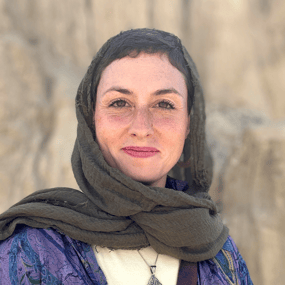
Psychologist, plant medicine practitioner and educator.
Bárbara is an integration specialist, crisis response coordinator, retreat leader, and an arts-based educator, living in the Sacred Valley (Peru).
With a decade of experience in the field of plant medicine and psychedelic care, she supports participants, practitioners, and communities with in-ceremony care, integration, ethics, safety, and responsibility in plant medicine practices.
Bárbara is co-founder and director of SERT (Spiritual Emergency Response Team), in the Sacred Valley. This community-rooted initiative offers guidance, resources, compassionate support in situations of crisis connected to psychedelic and spiritual emergencies, within the Sacred Valley community.
She holds a MA in Applied Theatre, an artistic pedagogy facilitating community care and education through theatre-making and embodied storytelling. Her arts-based project "Once Upon A Ceremony" (2024) offers a guided group container for playful expression, active reflection, and ethical awareness around plant medicine experiences. This work culminates in "Wisdom of the Holders" (2026), a retreat for plant medicine practitioners to integrate their practice, focusing on ethics, self-care, and long-term sustainability.