April 19, 2026

Ep23 Barbara Ann Michaels—Humor as Healing, the First Laugh, and Reclaiming Play as a Lifelong Practice
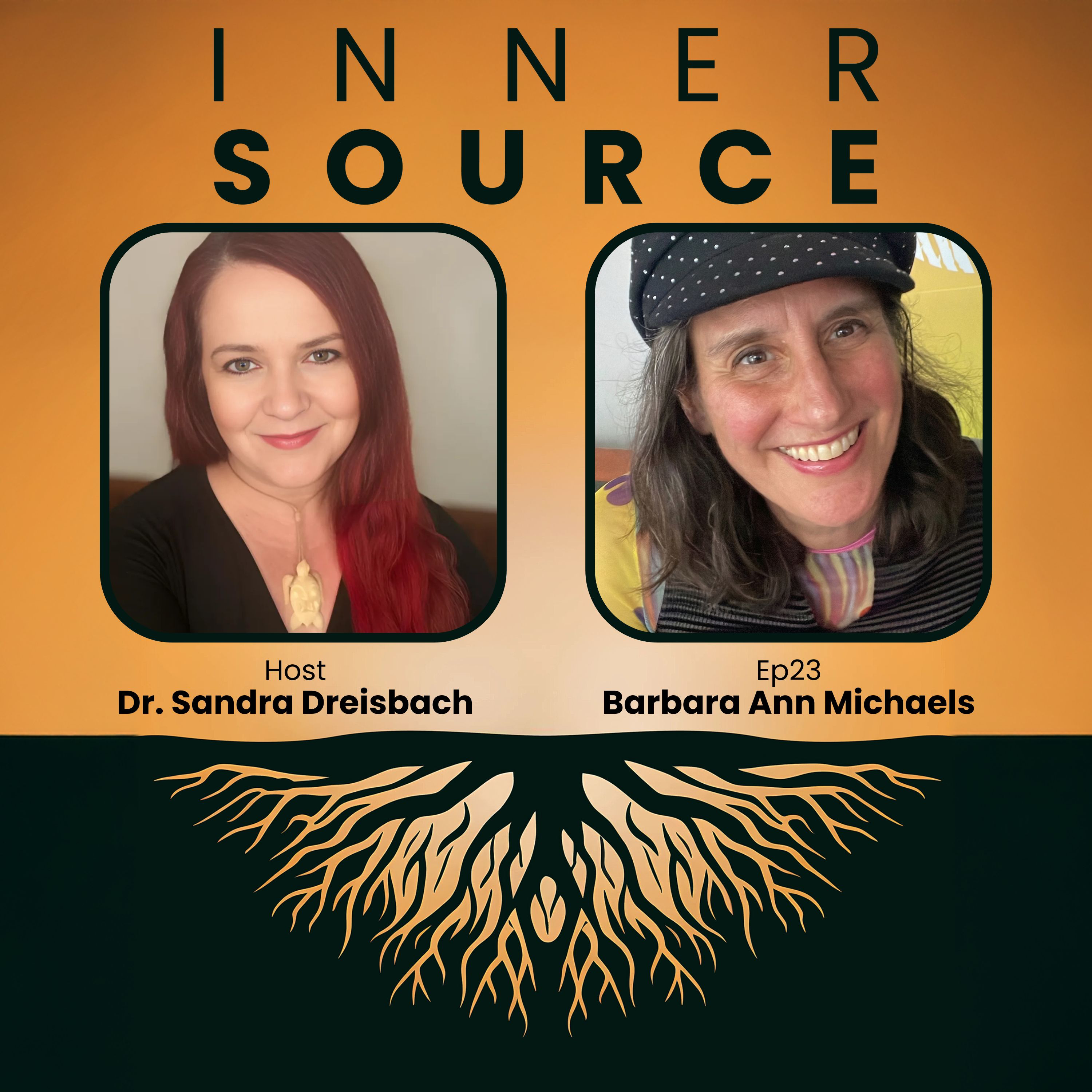
What if the moment you finally laugh at something that once broke you is actually proof that healing has already arrived?

That's the quiet power at the center of this conversation between Dr. Sandra Dreisbach and Barbara Ann Michaels—performance artist, interfaith minister, and the self-described Jester of the Peace. Barbara has spent decades using humor not as a distraction from pain but as a precise instrument for releasing it. She founded Humorville, an immersive pop-up wellness experience where participants receive a passport to something they want more of in their lives, marry it, vote themselves president of it, and receive a letter from it weeks later in the mail. It sounds playful. It is playful. And it is, as Dr. Sandra discovers in real time during this episode, genuinely transformational.

What does it mean that laughter and tears are actually the same cathartic energy? Why is vulnerability a more radical artistic choice than anger? What is "the first laugh" — and how do you know when it's safe for humor to enter a story that was once too painful to touch? How does humor create connection across divides that logic and reason alone cannot cross? And what would it look like if we stopped treating play as frivolous and started recognizing it as one of the fastest paths to authentic inner change?

If you've been searching for healing in serious places and wondering why it keeps feeling incomplete, this episode is worth your full attention.

Barbara Ann Michaels  0:00  
There's so many ways to be creative, and there's so many ways to be humorous. I mean, humor is everything from the tiniest smile in the heart all the way to rolling on the floor laughing, and a difficulty that can be reframed is any is anything from the tiniest irritation all the way to devastation when the first laugh shows up, that's when we put space around the pain and the heart has hope. Welcome to

Dr. Sandra Dreisbach  0:18  
inner source. I'm Dr Sandra Dreisbach, whether you're just beginning to explore your inner landscape or you've been doing this work for years and understand that transformation is a lifelong journey. This is your space. We're diving into real conversations about personal growth, Shadow Work, and what it actually takes to create lasting change from the inside out, because the truth your most powerful healing tool isn't out there somewhere, it's already within you. Let's connect to that inner source together. The information

Speaker 1  0:55  
shared on this podcast, our website and other platforms may be triggering for some viewers and readers, and is for informational, educational and entertainment purposes only. It is not a substitute for professional medical, legal or therapeutic advice. While we explore topics related to altered states of consciousness, we do not endorse or encourage illegal activities or substance use. Always research your local laws and consult qualified professionals for guidance. The content provided is as is, and we are not liable for any actions taken based on the information shared. Stay supported and informed, act responsibly and enjoy the podcast.

Dr. Sandra Dreisbach  1:26  
Well, today I have a wonderful, amazing conversation for you all with Barbara Ann Michaels, also known as the gesture of the piece. She'll be talking about a bit about that background, of like, why is she the gesture of the piece? And she is a performance artist and an interfaith minister who uses humor for humanitarian purposes and for healing, as you'll see in this episode, she founded humorville, which is an immersive pop up town for humor and wellness, and you'll be able to hear a bit about that. You'll get a sample of humorville. You'll get to hear about me becoming in relationship to play, and I'll let you find that out. But she works not just in corporate and conference and cultural community, but across divides, but helps people when they're facing a loneliness or uncertainty. A lot of her projects have shared wellness, given relief and joy, helping people to move forward through inspiration and collaboration. And I hope you'll get a sense of that literally live through our my experience with her in just this small little episode of our little visit and taste of humorville and Barbara. Ann Michaels, so enjoy, Bring, bring your joy and bring a bit of play to this episode. Well, you all are in for a treat today. We have already been laughing, and this is Barbara and Michaels, also known as a

Barbara Ann Michaels  3:06  
jester of the piece.

Dr. Sandra Dreisbach  3:08  
Yes, and maybe, maybe we were overdue for extra humor. But regardless, since we do talk about inner journeys of transformation and healing, when I met Barbara, I couldn't I couldn't help but wanted to have her on on the show to talk about her work and her as a person. Barbara, maybe you can start off by just saying a little bit about yourself, like, What do you mean by gesture of the piece? What is a gesture of the piece? What who are you? What do you do?

Barbara Ann Michaels  3:37  
What do you mean? What do I mean? Gesture of the piece is a name that I got. It was given to me, actually, or suggested to me when I was a wedding officiant. And I was a wedding officiant in New York City for 10 years, I officiated over 500 weddings, and I was serving the population of people who need to express their creativity to feel authentic. So there are some people who need their tradition or it's just not going to feel real. And there's other people where, if they don't make up a ceremony element or or redraw wedding, it's supposed to be or express themselves in a significant way, it's just not going to feel real. And that population of people didn't really have an ambassador full on until I started serving people who were just like me, because I definitely would fall in that category. And my very dear friend Michael Koran said to me, Well, you're a clown, because I have a background in clown theater, and you're ministering, because I was performing weddings, he said, You should be the jester of the piece. And I said, Yes, I should do that. I should. I should. And one of the funny things is, when I first started being the jester of the piece, some parts of the wedding industry were very embracing of that, because. Because it is, or was, a kind of underserved population in an industry that is very significant and has a lot of structure in it, and then other people in the industry got question marks and eyebrow raises and a little, you know, fluffy, and we're like, you can't call yourself a gesture of the PSAT is not a serious designation. We are a very serious industry. This is about people's life cycle. Ceremonies. We must be reverent, and I, and I just had to not listen to any of that while still loving the people, because you have to keep loving the people, even if you disagree with them, and make a space for what was necessary in that industry, which was something I would also say is necessary in every day, which is expressing ourselves, to feel authentic. And it ended up being phenomenal. It's just an absolutely phenomenal thing to do. I also had the grace and honor of officiating some of the first same sex marriages in New York State, along with other officiants, yeah, along with other officiants who just happened to be in the right place at the right time, like myself and I, I just I got to stand for love and creativity, not only at the same time, but as exactly the same thing. Because to me, humor and art and love are all the same, three words for the same thing, even though it's three facets of the same thing, they all mean the same thing to me. Humorous. Art is love. Is humorous. Art is love.

Dr. Sandra Dreisbach  6:30  
I love that, and it does bring me joy, and it is a true artistic expression. So I resonate with with that and and also, I mean, I don't talk about much, but I have done multiple ceremonies for people, including same sex ceremony, which was very exciting for me. I'm like, yay. I gotta be a part of it. But I appreciate the fact that you're giving a space for people to create their own ceremony, to find that inner alignment of expression to them and and when they're literally coming together as a couple, or however they identify and and express that creatively and and be a place of joy and ministering, you know that expression of love and humor through that I really do.

Barbara Ann Michaels  7:21  
Yeah, I will give you an adorable example. And adorable is totally the wrong word, even though it's also, oh no, that's perfect. It is adorable, and it also is it's touching and it's funny, but it's real. And so I had these two people, and they they were having a ceremony, but they both were, it wasn't quite that they were shy. They just had things they wanted to express to each other privately, except you're having a wedding in front of other people. And so what, and what we ended up doing is because they both had this, had a foodie, a foodie sense, they went to each one, went independently, to a friend's house, and created one more so of food that represented the other person as a flavor. I mean, already

Dr. Sandra Dreisbach  8:22  
I don't know, like, if I was in a relationship, what would my partner represent me as a flavor?

Barbara Ann Michaels  8:28  
It just, I mean, it was just so joyful, yeah, is it sweet? Is it salty? Is it I mean, it's just, it's just beautiful and and then that, and those went in a tiny box that had some writing at the top of the box. You open the box, you read the note, you eat the thing you feel tremendously loved by your partner. Everyone's witnessing that. And because 80% of communication is nonverbal, everyone witnessing that, even though it's nonverbal, is receiving so much love and so much specificity. And I really existed when I was a full time wedding officiant, I really felt like I was creating art with all of my clients, which is probably why I did it for so long. And I also thought I was going to do it forever, and I was very surprised to find out that I wasn't going to do it forever, because I love to help people celebrate themselves, to have people feel self expressed, to use creativity to do that, to have people feel celebrated in their community, to have people feel loved. Personally, I just I to use all of the arts for well being. I mean, it's a perfect it's a perfect fit, in a way, except that it was a chapter, which surprised me greatly, but then the fact that I was doing it all also surprised me greatly, because one summer, two friends of mine, one in California and one in Maine, said, Hey, Barbara, can you officiate our weddings? And I said, Sure, what? Because it's, I mean, it's a tremendous honor, but I didn't intend to do that, and I also didn't intend to do a lot of things in my life. They at some things I did intend, and a bunch of things that have turned out to be. Really important to me. I didn't intend at all. And maybe that's true for every maybe that's true for everybody.

Dr. Sandra Dreisbach  10:05  
I love that you're speaking to that because I, you know, I feel like that's something that I've been trying to share as I share pieces of my journey on this podcast and other places, is the fact that, you know, we when we're on this life journey, when we're connecting within and we're finding that path, you know, whether you call it, you know, the golden egg project of your life or not. You know, there are phases and like, Well, that was, that was a beautiful phase. It was perfect as it was. There wasn't something imperfect about it, but I felt whole and complete, and I was ready for another chapter. And I didn't think this chapter was going to end, but it did, you know, it changed. I changed, and we and we grew so, so it makes me think not just about that part of your journey, but what did you grow into? So you're still a jester, right? You still call yourself a jester of the piece. But what kind of a gesture Are you now?

Barbara Ann Michaels  10:55  
Yeah, so I kept gesture of the piece because it means humor for humanity. And for many, many years, I am such a multi passionate person, and I have a lot of creative interests. I have visual arts interest, movement based interests, writing interests, psychology interests, the human condition, quantum life, I mean spirituality, the weather, serendipity. You know, they're really good stuff. Like, yes, more of that. Let's have more. So because of that, I would have so many ideas, and I'm also a really big idea, or ideas all the time. And so it would be like, but if I work on this that will get left out in the dust, or that's going to miss me if I do this one. And how do I can't choose. And so that created a certain amount of frustration, or stagnation, or or just non choosing, which ends up being a choice if you don't choose, choices get made anyway. And and I felt a lot of frustration about that, until I was in one particular mentorship, and my mentor, a really good mentor, helps us see where we're not looking. And this particular mentor, I don't remember exactly how it occurred, but one day, I realized that humor and wellness was the through line of my life so far. And I used to say humor and wellness is the through line of my life. However, since we're having a conversation about change in the unexpected, I'm going to update that and say that humor and wellness is the true one of my life so far. And if we get to this end of this podcast, and I have a new one, I'll be okay with that, because that would be what happened next. But even if I think something is the work of my life, like I did with winning officiating, it was the work of part of my life, and is humor and wellness my whole life. It's very, very, very important to me, because humor helps release stuck energy. It recreates relationships, it brings forgiveness. I mean, humor can also be used to hurt people, but that would this is the difference between laughing at people which is naturally divisive and laughing with people which is naturally connected. And I live in New York City where sarcasm runs rampant, and could practically be mayor, but sarcasm already has enough attention. And I think sarcasm is super fun. It's very edgy and sassy and and eclectic, and you can do a lot with it. However you can. There's some things you can't do with it, and those are some of the things done by kind hearted Sweetie Pie humor. And I used to be like, but I'm such a sweetie pie. What am I going to do with my sweetie pie humor? How like to be nice all the time my sweetie pie humor. But what I've come to understand is that it's way edgier to be vulnerable than it is to be angry, because underneath the anger is vulnerability. And so when you go deeper, you get to vulnerability. And so I'm actually an edgier artist, because I focus on vulnerability and kindness and softness, because hard edges go up first. And it took me a while to realize that

Dr. Sandra Dreisbach  14:01  
I think there's such depth of truth to what you're saying right now in this moment like I want to almost take a pause right here, just to take that in. Let's do it right, you know, because I think I'm pausing Me too. Let's pause together. Let's pause my pause. Yes. Pause. Now, kind of pause

Barbara Ann Michaels  14:30  
I grew up with cats, okay? Is that pause with positive See, this is what happens. You know, you have a creative mind, and it just goes and goes and goes and in a way, there's just not enough space for the ridiculous and modern life, I agree.

Dr. Sandra Dreisbach  14:45  
And maybe, maybe, maybe this, this particular episode in this conversation with us, is helpful to maybe bring some of that back and but I can't, I can't let us go too far without you talking about the space that you're in right now. Yeah. Yeah, tell tell us about this experience. And I don't want to say too much so that you can tell the story. Tell us about what experience you've created for people and CO created with people in your space, right there.

Barbara Ann Michaels  15:15  
Welcome to humorville. Humorville is the tourist attraction for your heart. It's in one room, which is a little over 200 square feet, which is not a big room. However, you can have a big experience in a small room. Humorville is a small town, and it's a small town for self expression and community. You come in and you get a passport to something you want more of in your life. What? What is something you want more of in your life today? That is a question for you. I mean, I would

Dr. Sandra Dreisbach  15:43  
have said humor and joy, but you're already serving it, you know, so like humor and joy and play?

Barbara Ann Michaels  15:50  
Yeah? Play, yeah. So you get a passport to play. I want a passport to play, please. And then, as we go around town, and this is a, it's in a, it's an interactive, participatory experience for up to eight people. It's very intimate. And as you go around engaging in the different metaphors of a town, which I didn't expect to create, which we'll go back to in a minute, when you get to the marriage bureau, you marry play. And when you get to the post office, play writes you a letter, and when you go to the voting booth, you vote yourself president of play. And there's a telephone company, and there's a library where you tell stories from your life about play that were harder than they're funny now and and one of the humorous things about this is that I did not intend to create a village these concepts, these civic engagement concepts. I didn't even realize they were civically engaged for over 10 years. I when I was a wedding officiant, I started marrying people to themselves in the street, because I have a background in street theater, clown theater, improvisation, Festival, the festival arts, stilt walking. I have a variety arts background. So I found myself not sitting and thinking, what do I want to do just being like, go outside and marry people to themselves. Okay, so there's no ceremony for best friends, and there's no ceremony for the person who introduced you, the person who changed your life, and there's no ceremony for the person at work who brings out the best in you, or who helps you stand up when you feel like you want to fall down like there's no there's no acknowledgement, and those are really important life relationships that there's no public recognition for. I mean, maybe there's friends there on the calendar, but it's not widely celebrated. If so, I mean birthdays sort of so I started doing that, and then the next year, it was an election year, so I started going out voting people president of what they care about in the street in Times Square and Central Park here in New York City. And then I got a grant for that one and toured it around to seven cities voting for people in New Orleans and Miami and Chicago and Philly and some other places, voting people president. So what do you want to be president of? If you've been president of if you were president of anything Well, President of free food for children, president of naps, president of dolls and president of thinly sliced Nova and president of peace and innumerable parents saying, I am president of my own household. Thank you very much. I have noticed that if with these projects, if people need a serious moment, they're going to say something serious. And if they need playfulness, they're going to say something playful. And the projects all meet each other, meet people emotionally, wherever they are. So I then there was a post office that arose, and there was a library that happened, and and then one day, which is a day I do not recall, I realized that a village had arrived, and I thought, well, if a village has arrived, a village should be in a place. And so then I started talking about having a place, but I wasn't it was just like, well, what if I did a house takeover, a hotel takeover, a strip mall, takeover, something. But it didn't occur to me that it could be all in one room, I always and it may one day be in many rooms, and there may be many humorvilles One day, which is, I would love that a little community center for humor and wellness all over the place. So now humorville is in one room, and it is transformational here, because it's so joyful, and I call it a tourist attraction and not an immersive art installation, even though it is an immersive art installation, don't tell anyone

Dr. Sandra Dreisbach  19:32  
well, and if you ask me, it's more than even both of those things to me, it's a healing journey, it's a transformation journey, and it's even like A sort of, even a golden shadow journey, right? If they want, like for me, if I'm saying I want a passport to play that says, in some sense, that I don't feel like I'm getting enough play in my life. And if I go on a journey, yes, in humorville for play, then I'm literally creating more play in my life by by marrying it, by being the. President of it by by having a message from Play and on all these sort of things. And it creates that, that you start with that passport commitment, right, just like setting an intention for other journeys, and then you're literally giving them a process and an experience of that and that they can and they literally create it in that small, small space and in a community setting. And maybe you could talk a little bit more about about the structure of of the experience, because it's, it's you do improv, Improv Theater, there's a sense of play like, I know people can't have the experience right now in this moment, but what, what's the journey like for that small group of eight people, how do you set it up so that they have that unique experience, but also have that sense of of community?

Barbara Ann Michaels  20:49  
We actually could experience one part of it. I could either marry you to play or vote you president of play, which everyone

Dr. Sandra Dreisbach  20:55  
you like better? My gosh, okay. Well, see, I think if I, if I was going to be President, I'd be president of love. So like, you know, but if I'm gonna, if we did do the passport to play, but we can, we can marry me to play, I'm, I'm okay being married to play, playing.

Barbara Ann Michaels  21:08  
Okay, married, okay. So welcome to your Well, welcome to your ceremony. So when there's eight people here, I'm the gesture of the piece, helping everybody. I'm not facilitating the experiences the I call everyone citizens of humorville, because you become a citizen of humorville and you get your humorville passport. So the citizens officiate for each other, and I'm running around helping everybody all the time to do that. So it's empowering to stand for other people's aspirations. That's another, another aspect of it. So for you with your in and right behind me, there's a series of pink flowers that have very pretty lights in them and surrounded by some white fabric. And that is actually the marriage bureau of humorville. And if you're listening to this on audio, you can imagine flowers that go all the way up the wall, 10 feet, that are pink and little white twinkly lights and prettiness. And before we do this, I am just to contextualize it a little bit more. Some artists lead with edginess in order to help people release into play, and I lead with playfulness and safety and kindness so that people will say deep things and still be uplifted. So it's two paths to the same thing. I just happen to be one who uses the playful, fun path of change and transformation. So when did you and play first meet?

Dr. Sandra Dreisbach  22:34  
When did we first meet? I probably was a baby when we met.

Barbara Ann Michaels  22:39  
What happened?

Dr. Sandra Dreisbach  22:40  
Then? Probably Play Doh and finger paints and and playing with my brother, who was younger, whenever he came around, but, but, but play doh paints are the first things that come to mind when I think about young, early play. And actually, allegedly, I got my mom would make me play doh, homemade Play Doh, and it could, and I don't know whether it was in part, inspired by the fact that I would eat it, or whether she also liked the fact that she made the Play Doh. But I can't, I can't speak to that cause, but I do know that I did like the salty flavor of the Play Doh.

Barbara Ann Michaels  23:18  
I understand, I remember you say play doh and I taste saltiness. It's a memory that no one can ever let go if you've had it. So that's how you and play first met. So what? What do you rely on about

Dr. Sandra Dreisbach  23:31  
play, that there's no judgment in play?

Barbara Ann Michaels  23:35  
Yeah, when you're free, yeah, because you're either playing or you're judging, you can you, it's like painting. You can't paint the painting and analyze the painting at the same time. They're two different processes, yeah, and because paradoxically, you're never going to change, which is what you rely on about play. And then paradoxically, you're also going to change constantly, all the time. And so the next question is, what have you learned from play? What has play taught you?

Dr. Sandra Dreisbach  24:01  
Play has taught me creative expression and acceptance and freedom and joy, yeah.

Barbara Ann Michaels  24:11  
And so what is your what's your dream for the future with play?

Dr. Sandra Dreisbach  24:15  
Well, to keep it well, this

Barbara Ann Michaels  24:16  
is a commitment ceremony, so I think that you're doing pretty well.

Dr. Sandra Dreisbach  24:22  
No, but I mean, like, I think there's sometimes a sense that as we age or as we get older, that we're not allowed to play and and I definitely have had an intention to keep play as a part of my life, as well as humor and joy and freedom and authenticity and vulnerability and love. And to me, they they really are intertwined, just like you were sharing earlier and and so at this time, I realized, like, oh, maybe I haven't been playing enough. I'm planning on nurturing play more and making sure that play has a a strong can. Consistent role on

Barbara Ann Michaels  25:00  
my life. Oh, then this is a good time to make your vow, so I'm ready to make a commitment. So say, play I vow. And say your vow, whatever your vow turns out to be, okay.

Dr. Sandra Dreisbach  25:12  
Okay, play, I vow to play with you for the rest of my life, because your beauty and joy and love make me more of me and more for everyone, and help me to create the impact I want in my life and in the lives of others. Thank you,

Barbara Ann Michaels  25:32  
and so by the power vested in me, by the power vested in you, by play, which is part of the very fabric of life and is naturally altruistic and brings clarity and energy and peace, simultaneously to ourselves and others, I hereby pronounce you and play in lifelong, lasting love you may hug and kiss yourself, yay. Actually, you know what?

Dr. Sandra Dreisbach  26:03  
I wonder I wanted the muffin thing that

Barbara Ann Michaels  26:08  
would make sense since, since you married play. So that's what it feels like to marry play in the marriage bureau, and it is both. It is both playful and serious, because you said some really serious things, but you also have an abiding sense of joy, and it's also fun. And so I'm a I am a serious artist. I just want people to give their gift to humanity while they're still alive, and I happen to use play as a strategy to do that, because I myself, it's faster, and I know I'm not alone. So for anybody else, for whom play gets us there faster, we need to be able to find each other and do that together, because it's a community activity. And so that we also have the and there's the So, yeah, you'd become president of play and and also love, which I would say may mean the same thing in some sometimes. And then story, there'll be stories about play that were hard done, that are funny now and on and on. And then when play writes you a letter, then you get the letter in the mail within a couple of months.

Dr. Sandra Dreisbach  27:08  
Oh, I love it, the real post office. And thank you. Yeah, you already brought more play into my day. I love everything about the idea of humorville, and I think even that note you mentioned about seriousness, I'll bring in a tone into that, into our conversation. You know, at a time in the world where we see a lot of challenging things arising, where the seriousness of what is happening in the world creates a not just a heaviness and a seriousness, and it's not to belabor the significance of it, but we really do need to empower different ways of supporting ourselves and ways of addressing it. And I think sometimes we think the only way is to be more serious, is to see the weightiness into you know, and I'm not, and I'm definitely an advocate. I definitely have been out there, and I've definitely, you know, have protested before and things like that. And I'm not saying anyone can have any particular political whatever thing that they want, but what I love about the message that you're already bringing to the table here at the times that we are in is that there are other ways that we can advocate and create peace, joy, love and support for one another.

Barbara Ann Michaels  28:28  
Yes, humor helps release stuck energy, and anger creates stuck energy that not saying anger is bad, anger is really important. I love that quote, anger is the energy of spring. And how angry does this angry does the seed have to be to be like, the heck with you dirt? I'm coming through. I mean, there's like, a tremendous amount of energy that goes

Dr. Sandra Dreisbach  28:52  
along with that right now.

Barbara Ann Michaels  28:54  
You know, we are

Dr. Sandra Dreisbach  28:58  
very much so a sense of dissatisfaction, but also a willingness and a hope for satisfaction and greater creation. You know, greater movement, a movement forward.

Barbara Ann Michaels  29:10  
Yes, and so the impetus to use humor to have hard conversations, we might have to remind ourselves of it, but if we practice it, there's a reason why some people get news from comedy shows in the moment that we're living in on all in all dimensions of political belief, actually, and it's because sometimes things are hard to see. What if you put, if you put some humor on it, if you put some humor on it, then, then, then it's easier to look at it and and to the degree that things happen in the past, energy gets stuck. If it didn't go as expected or went wrong or hurt, everything that hurts wants to heal. And when laughter shows up with the situation, which is different than using humor as a deflection to avoid the situation, which I. I have invented a word for which is called communicating, which is communicating using comedy to communicate. Yes, communicating, communicating is using comedy to avoid the situation entirely. Which is not what we're talking about. We're talking about the beautiful beam of laughter to start to unravel stuck energy, even if the first laugh is so tiny. Just be like and I would also say that what I'm speaking about using humor for healing. It's it's not for the person in their deepest pain. Most of the time, it's as soon as it's as soon as any iota of the person, any cell of the person, reaches for hope for the first time, then laughter can be with the light that comes in and and not all of our stories from our lives will find humor in our lifetime. I know that, and we it's called too soon in the comedy industry, too soon. And some things are too soon forever. Some things are too soon for generations. An example I very often give of this is that war is terrible all the time for everyone, even if there's even if people have an idea that there's a noble purpose happening, and there can be a noble purpose happening, it's still terrible that it even has to exist. And so given that that's the case, and it's so terrible, how could we ever make a joke about it, and how many movies are there about war that are funny? How many television shows about encampments of soldiers? Mash is a really good one from my when I was growing up. And there's comedy shows, there's comedy stories, there's there's people telling funny stories about war. How could that possibly exist? It possibly exists, because everything that hurts wants to heal, and humor is the harbinger of healing. So when the laughter shows up, when the when the positive humor shows up, we know for sure that healing is happening. It's not something that we walk with on a daily basis. I didn't invent it. It's part of the human condition for all of human time. And no matter how much technology we have, this is never going to change, because this is how the human heart works. And as as as we remember together that humor is for healing, then we can stop saying, I'm not funny, I'm not a comedian, as if the only allowable use of humor in our lives, we're not

Dr. Sandra Dreisbach  32:15  
an artist, right? You know, like, I'm

Barbara Ann Michaels  32:16  
not good. If I can't draw, like, okay, maybe you can't, but if you could probably draw better, if you if we practiced it, but maybe that's not important to someone. But there's so many ways to be creative, and there's so many ways to be humorous. I mean, humor is everything from the tiniest smile in the heart all the way to rolling on the floor laughing, and a difficulty that can be reframed is any is anything from the tiniest irritation all the way to devastation, all of it can find. I call it the first laugh. When the first laugh shows up, that's when we put space around the pain, and the heart has hope, which is why I said earlier that if any enter, any ounce of energy in a human being is looking for hope. Humor, humor can bring it well. And I love

Dr. Sandra Dreisbach  32:59  
that you, you're bringing up very clearly. And I think we're and I hope we bring across in this conversation for others, is that usually when people look for healing, they don't go like, well, maybe I need to add more humor. That's not usually the first go to like, maybe I need to go talk to my therapist. And I'm not against therapy, right? Everyone, right? But like we don't look for sources of joy, sources of humor, as ways of creating that that healing and support and relationship as part of our journey. And I love that, not only that, you provide that experience of connecting to these parts of ourselves that will bring us, you know, literally connect us into humorville and be citizens of humorville, like you, official representative, official citizen, official Passport, passport to play or otherwise show that it's literally in practice, it is healing and uplifting. Humor as a healing tool. I mean the same more time that you mentioned, I think I've also noticed, at least observationally, a pattern of of more humor arising because the need is greater for healing. And I don't think the heal, the healing community in general. I don't feel like could recognize more the importance and role and significance of humor as a part of that journey, that that's, that's one of the the tools or possibilities that we can create. And, yeah, maybe not at the beginning, but even knowing that that could be part of, like, that little spark of hope, okay, this is maybe the space for it. You know, maybe they can't laugh at this, but they can, they'll be in a space eventually where they can find the joy

Barbara Ann Michaels  34:45  
and as soon as someone can genuinely these are some of the physical metrics on this. If someone tells a story from their life that was hard, then that's funny now, and the story clearly brings them energy. Their face brightens. They might laugh or smile. You can see that. Are relaxed, they're breathing more if those things are happening and the person is genuine, because the original thing usually isn't funny, but something along the journey has found humor, even if the original thing remain it's not it's not necessarily there. But if any aspect of the journey finds humor when someone's telling it, you can feel it, and if they genuinely feel better when they are telling this tale, that's when their story can help another person find hope, because, and it doesn't even have to be about the same thing. This is one of the most connective I have found, that people can full on disagree with each other about almost everything in life, but if someone is laughing with their journey, it's like, wait, wait, wait, wait, you, you, you can find humor with your house fire. Well, if you can find humor with that, maybe I can talk to my sister or what it's like, wait, you can laugh at the part of your life. But will you tell that story again? Really? It's it cuts through everything, because laughter predates language, and we laugh before we talk, and we all laugh the same way, and laughter doesn't have a language. It's, it's just, it's, it's, it's how. It's a catharsis. And one of the ways that we know that is when you laugh, the deepest laugh is until you cry. I laughed until I cried, but then crying also resolves in laughter. I cried and cried and cried and cried. And then when you've cried, your last cry, laughter shows up. And when you've laughed, your biggest laugh, tears show up. It's actually one energy. It's one cathartic release of energy. That's all it's all one caboodle. No, I

Dr. Sandra Dreisbach  36:36  
really resonate with that. Because, like, sometimes I'll even say to people like, well, it's either laugh or cry, and I'd much rather do the laugh, you know, like they given the given my options, like, you know, I could cry about it. I mean, not, not that there's a space for crying everyone, no shaming on crying. But like, like, the release needs to happen. It needs to come out. It needs to be released. And I find so much more, not just the release, but also the upliftment, by a conscious choice of aligning with laughter and bringing laughter into the room, or, yeah, or or even teasing. I mean, not a sarcastic teasing, but like, I know sometimes I personally, I'll admit that I sometimes will get in trouble because I'll tease someone that may not be ready for teasing

Barbara Ann Michaels  37:20  
too soon, that's exactly and and humor is not infallible. Humor fails not infallible. It is not sometimes we try and we think we're being kind hearted, but we're not, and somebody gets hurt. But if we can find humor, even in that, well, I tried to bring humor to the situation. It was too soon. I'm sorry, maybe in the future. Yeah, probably in the future. But not yet. No, not yet. And it's, it's, it's not that it's beautiful and it's imperfection that way. And I you could say like, well, I can either laugh about this or cry about this, or cry until I laugh about this, and that would be a true statement.

Dr. Sandra Dreisbach  37:59  
What I also love about it, though, what you're saying right now, in a lot of healing circles, we talk about, like rupture and repair, and the idea that some humor could fail, like, just like an improv because, or like some other sort of things giving that actually, since I'm now, you know President and married to play in that factor of humor and play into the conversation of like, well, why aren't you pulling in play in there? Why aren't you bringing in humor? Why aren't we finding other ways to connect, in ways where we can relate, that may not even be about the subject, right, but can help bridge that gap, to help do that repair work after a rupture, or even that natural aspect of like, sometimes your attempts are going to fail, and being able to laugh at that, you know, will allow you to stand up that eighth time after falling down seven, as the Japanese proverb goes. You know, I love so much of what we've already shared with everyone, but I want to give you an opportunity to share, like, if people are wanting to connect to humorville, or find the little piece of that if, even if they can't come in person to humor Ville. Obviously, I haven't come to humor Ville in person, but I got a chance to do a passport, guest visit and marriage.

Barbara Ann Michaels  39:17  
I brought humor Ville to you. I also do tour. I all of these projects started off as touring projects, and I have toured them around the planet and so, and continue to do so. So it is possible for humanville to come to you, if someone is listening right now, sometime today, find another human and swap stories that were hard then that are funny. Now it's a great dinner table thing, great Strangers on a plane thing, great, awkward holiday thing, great standing in line for too long, waiting for something. Thing, great, ordinary family dinner thing, it's so what it does is it celebrates the. Other person and their resilience. Because in order to hear about the story that went from hard then to funny, now, we have to touch the thing that was hard, and then we have compassion, and then we see the transformation, and we see the strength building in how it became funny now, and then we both find humor in it, and we can reflect back to the person why it was funny to them. Meanwhile, they've had the constriction in their body of remembering the thing, but then the relief all over again. It's like, every time you tell a story from your life that was hard, then that's funny, now you heal yourself all over again. Because that's what the that's what the laughter and the openness and the breathing, and then everybody's happy and empowered. It's like, Well, okay, if you can laugh with almost drowning and waiting 40 years to learn how to swim, which is a friend of mine who's interviewed on my website and telling this exact story. And he would just pretend he would, he would be like, oh, you know what, everybody we're all going off boating. Everyone's gonna go swimming. I'm just gonna drive the boat today. That's what I'm in the mood for. I just want to deliver to have a good time. He would just do all manner of things so that nobody would wouldn't know he couldn't swim. 40 years later, finally learned how to swim so he could run a triathlon for his 50th birthday. And so to hear that, it's it's funny for someone to pretend to know, to know how to swim for 40 years and secretly not know how to do that. That's it's ridiculous and it's funny, and we could laugh about it together. But then also the strength it takes to finally face at 50, almost drowning when you're nine, and the visceral in the body, and then deciding you're going to give it to yourself, it's incredibly empowering. What else has someone been holding for 40 years that they haven't done because it stuck and spiraled up? How could telling us? How could hearing his humorous story about that, and his name is Jared, how can hearing jared's story about that give anybody a little hope of being able to unravel the thing that they're not doing that they want to do, because something hurt that time and the energy is still stuck, because humor can show up and help, help release it, and hearing other people's stories can show us it's possible, and if we do this as a regular practice, there are more uplifted, stronger, more authentic people all around our lives, including ourselves.

Dr. Sandra Dreisbach  42:22  
That's beautiful. And speaking of I would be I'd be bereft if I did not ask you, what about what has humor meant to you in your life?

Barbara Ann Michaels  42:34  
Oh, so I am an only child, and when you're an only child, you spend a tremendous amount of time by yourself. And I was also an only child in the 70s, when we did not have phones, cell phones, and there was no AI and and so you just spend a lot of time by yourself. And I found that one of the ways that I could reliably create connection in my family and with others, because when you're an only child, you have to learn how to be around other kids too, because it's just you. And I found that I could use humor to create connection inside my house, outside my house, inside my own mind, and it saved the day over and over and over and over again. And someone said to me not long ago, they actually accused me of it or teased me about it, and said, Well, you just made your coping strategy into a career. And I said, Well, yeah, but don't most entrepreneurs do that. Isn't that everyone does that. Doesn't everybody do that. And so humor, Humor has equaled love to me. When I imagine my mother and father laughing, it just my, my whole body, I just, I just exhale, and it's so beautiful. And I And it's, I have such, such beautiful, grateful memories of laughs that we have shared as the trio. And I mean, there's a small dog now who's like my little dog sister, who wears 90s and dresses and stuff, but I don't know if the dog laughs. I mean, maybe the dog laughs too, or maybe the dog is happy. Part of the reason I went into clowning is that I, I was able to reframe my fear of failure in an art form that celebrates failure. And I it was like, wait, what? I'm failing, and everybody still likes it. I mean, not likes it in terms of, this is a successful moment of clown theater, but respects me for trying and values me even more for going for it, and understands that failure is a really natural part of the journey and is something to enjoy along the way. Like that's possible. That is possible. I don't know who I would be if I didn't study clown theater. I I just have been able to be so much kinder to myself and find. Funny in my own journey. That does not mean that I have not had big ups and downs. I am a human and all of my artwork is about love. So I have a really big heart that feels things deeply, and I cannot imagine life without turning to humor for restoration. It is, I like to say that anything that brings energy is life, therefore humor is life.

Dr. Sandra Dreisbach  45:27  
It absolutely does bring energy and beautiful love and joy. And I love this idea of of that being a clown allowed you to fail and be celebrated in it. And I think there's a deeper truth in that, that we not only connect with our own failure by seeing humor added to a failure experience, but also a lesson to be learned around being more supportive around failure, right? But that's normal, right? You know, like, if we can all around these sort of challenges, when we'd have a different experience about all of it.

Barbara Ann Michaels  46:11  
There's this phrase in the business world. It's, I think it's maybe going out of fashion now, it was in fashion for a while. It's called failing forward. And people would be like, Yeah, I'm failing forward, yep, failing forward. Yeah, I'm gonna fail I'm just gonna fail forward while pretending that no one will ever see me failing forward. That is something I'll do privately that no one's gonna know about, because we're just gonna fail forward in secret, which is not what failing forward is about. Failing forward is and at least in business lingo, it's this effort to be like, Yeah, we took a risk. It didn't work out, we learn stuff and now, and yet, I greatly desire companies, companies to have when you on the first day of your job, that people who've been at your job longer than you tell you stories from their own lives about things that were hard then, that are funny now, about doing the very job you're about to do. Because it just would give so much, it just gives permission and safety, and then risks can be taken and and, you know, with with intention, let's take some intentional risks, except for sometimes, and we should just risk things because, you know, I feel like I feel like I need to, I feel like I feel like I need to have a caveat under that. It's like, you know, you went to risk things just because we'd be intentional about it. I don't intentional about it. I don't want anyone to listen to this podcast and do something bananas unless it's a really good idea. And with, you know, with the caveat that we try to take care of ourselves, but it's, it's a, you know, I recently found myself saying a phrase that I was talking to someone about why I didn't bike in the slush in the winter in New York City, because I'm an avid biker. All over the city, I found myself saying, Well, you know what? The reason that I don't bike in icy slush in New York City in the winter is that I'm crazy, but I'm not nuts. Like, what does that really mean? You know? Like, what does that really mean? It means that I'm a free thinker and I'm really open minded, but I'm not gonna put myself in danger, right? Sometimes we don't know that something is dangerous until we're trying it, and then some of the things that we don't try aren't dangerous at all. And like, well, that's dangerous.

Dr. Sandra Dreisbach  48:16  
There's a range. There's a range, right?

Barbara Ann Michaels  48:19  
It's so subjective. It's like it's dangerous to speak on stage. No, it's not. It's not dangerous to speak on stage, but it can feel dangerous, but

Dr. Sandra Dreisbach  48:26  
it's not, and that's the number one fear over the fear of death, you know, right?

Barbara Ann Michaels  48:31  
It is dangerous to bike in the slush, in icy slush in New York City, which is why I don't do it. But I, you know, I, I, but I am a pretty free thinker, and I do lots of other things like bike around New York City. Because some people would say you can't bike around New York City. That's dangerous. Well, it depends, it depends. It depends who you are. And I mean, I think it comes back to that. It's if we could all have two relationships with humor, if we could have our own very personal relationship with humor that's just me and my humorous energy and my life and the conversations that happen in my heart and mind with whatever I believe is the mystery of life, whatever that is, even if it's nothing. And then can we have a community relationship with humor? Can I have my friends that I turn to to help me find the funny? Can I can I share more freely my stories that were hard then they're funny. Now, can I ask other people for their stories that were hard then they're funny? Now, can I create I use positive humor to create community and strength in are all around me and and for and for good reason, because life, if we do that, life is not, not only more fun, but we have more energy to be our more authentic selves.

Dr. Sandra Dreisbach  49:43  
I think that is the perfect message to end on. Thank you so much, Barbara for for sharing your humor, your joy, your gesture of peaceness with all of us. I invite you all to check her out, especially if you're in New York City. Get a chance, but if she comes on tour or whatever, definitely check her out. But thank you, Barbara, for being on the show. It's a total

Barbara Ann Michaels  50:07  
pleasure and and i just i It's a real pleasure to be around you, because both of us care so much about about the role of play. I mean, you did, Mary play? But I did. I did. Yeah, it's care. So, yeah, it just cares so much about it and being a voice for it. And I encourage us to to keep on taking hands with each other and others. And just like, you know, put a little haha in the hands.

Dr. Sandra Dreisbach  50:35  
Yes, please be my part of my community of humor, if you will. You betcha, no pressure on the site now. Okay. Much love and thank you again for joining us. Thanks for being here with me today. If this resonated with you, subscribe wherever you listen and share it with someone else on their journey. And if you're ready to go deeper, take the free inner source assessment at inner source podcast.com it'll help you discover exactly what kind of inner work you need right now and where to start until next time, remember that everything you're searching for is already within you.


Barbara Ann Michaels Profile Photo

Performance Artist and Interfaith Minister

Barbara Ann Michaels, Jester of the Peace, is a performance artist and interfaith minister who uses humor for humanitarian purposes. She founded HumorVille, an immersive pop-up town for humor and wellness. An arts facilitator for over 30 years, Ms. Michaels uses humor, art and love to bring out the best in people, so they can bring out the best in each other. In this time of increased loneliness and uncertainty, her projects promote shared wellness, relief and reset, helping free people to move forward with inspiration and collaboration.

She works across Corporate, Conference, Cultural, Community and Academic contexts. She is a speaker and trainer on human connection, body language, shared creativity and humor.

Ms. Michaels is a graduate of Brown University, Massachusetts College of Art and One Spirit Interfaith Seminary. She is also an award winning wedding officiant, performing over 560 weddings, including costume and helicopter weddings and some of the first legal same sex marriages in New York State. She is an Ambassador of the Global Play Brigade and a proud member of the World Experience Organization. Her mission is to put humor back in the medicine cabinet for generations to come.