Ep28 Jason Burdge: A Police Officer's Path to Psilocybin, Building PATA With His Wife, and Healing First Responders
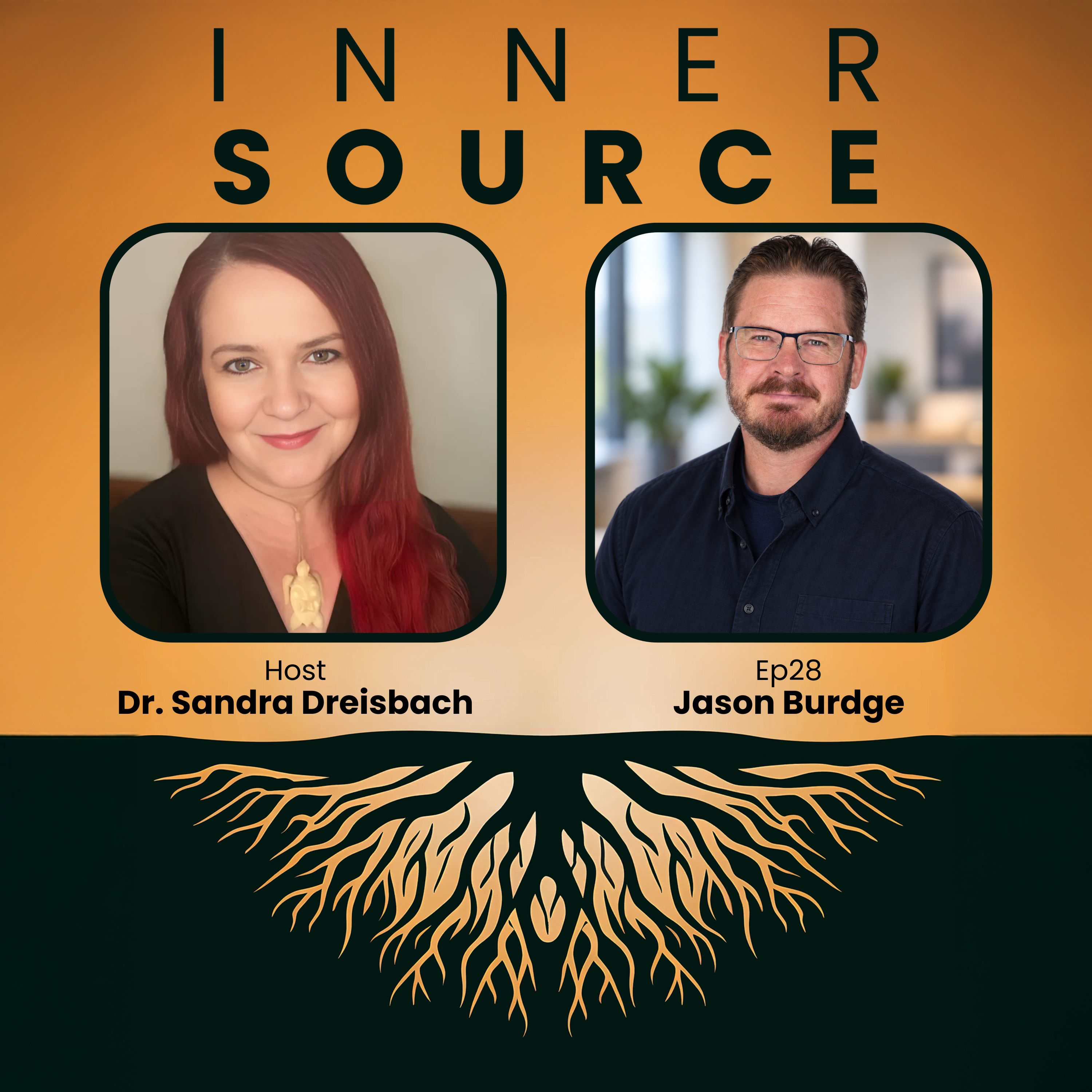
What happens when the person building the guardrails for psychedelic-assisted therapy is also the person who needed it most?
In this episode, Dr. Sandra Dreisbach talks with Jason Burdge, co-founder and chief business officer of the Psilocybin Assisted Therapy Association, known as PATA, now the largest nonprofit in the country focused on psilocybin and mental health. Jason built PATA with his wife Lisa, a mental health therapist, out of their shared belief in the educated and informed use of psilocybin.
But before any of that, Jason spent his early twenties as a police officer in Florence, South Carolina, a town once recognized as one of the most economically and systemically challenged in the country. He was involved in shootings and violent altercations, given as little as one day off before returning to duty, and it eventually led him toward the depression and PTSD that psilocybin, alongside years of therapy and community support, helped him work through.
Jason and Dr. Sandra talk about what it actually takes for first responders to get the mental health support they need, why PATA built its First Responder Collective, and how his own healing shaped PATA's three pillars: educate, empower, and heal.
They also get into the fractures inside the psychedelic community itself, the tension between Oregon's regulated adult use model and the underground and indigenous traditions it grew out of, and what it will take to build the kind of unified community that can actually move legal access forward.
Jason also previews the Collaborence, PATA's conference now in its third year, built to bring facilitators, therapists, indigenous practitioners, and underground guides into the same room.
If you have ever wondered what it takes to hold space for community healing while doing your own healing work at the same time, this conversation is for you.
______________________________
**Disclaimer** The information shared on this podcast, our website, and other platforms may be triggering for some viewers and readers and is for informational, educational, and entertainment purposes only. It is not a substitute for professional medical, legal, or therapeutic advice. While we explore topics related to altered states of consciousness, we do not endorse or encourage illegal activities or substance use. Always research your local laws and consult qualified professionals for guidance. The content provided is "as is," and we are not liable for any actions taken based on the information shared. Stay supported and informed, act responsibly, and enjoy the podcast!
Jason Burdge 0:00
By calling out issues like these are the things that we should address, and this is really how we can keep moving everything forward. We need to be really calling out where these challenges are, so that we can address them in community. There's nothing wrong with us having a good, really healthy community discussion where we can value each other's opinions, because there is no right way to do this.
Dr. Sandra Dreisbach 0:23
Welcome to Inner Source. I'm Dr. Sandra Drysbach. Whether you're just beginning to explore your inner landscape, or you've been doing this work for years and understand that transformation is a lifelong journey, this is your space. We're diving into real conversations about personal growth, shadow work, and what it actually takes to create lasting change from the inside out, because the truth, your most powerful healing tool, isn't out there somewhere. It's already within you. Let's connect to that inner source together. The
Speaker 1 1:00
information shared on this podcast, our website, and other platforms may be triggering for some viewers and readers, and is for informational, educational, and entertainment purposes only. It is not a substitute for professional medical, legal, or therapeutic advice. While we explore topics related to altered states of consciousness, we do not endorse or encourage illegal activities or substance use. Always research your local laws and consult qualified professionals for guidance. The content provided is as is, and we are not liable for any actions taken based on the information shared. Stay supported and informed. Act responsibly, and enjoy the podcast.
Dr. Sandra Dreisbach 1:31
In this episode of Inner Source Podcast, I had the honor and privilege of talking with Jason Burge. He is actually a professional nonprofit consultant who has over 20 years of experience developing organizations focusing on alternative mental health, and he's probably more well known nowadays as doing work with PATA, which we'll talk about at the beginning of the episode. But but he's also done work for psychedelics and recovery, for end of life psychedelic care, for the Psilocybin Facilitators Association, the First Responders Collective, and several psychedelic societies as well. As a part of PATA, I've also had the pleasure and privilege of working with him as an advisor doing ethics work. So definitely biased on this account, but I think it's just really important as a community to to show us and our relationships in community that it's not just the sort of like professional title, but we also have personal relationships too. And as someone who helps to lead Epic Ethical Psychedelic International Community to also help other communities that are also serving communities that we really you know whether it's AMAP in Australia or PATA that's primarily based United States for for psilocybin associated therapeutic association I think it's just amazing to see, even in my own little world that I get to share with all of you, how community shows up for one another, and how while we all have our own individual stories, our our inner source, our inner relationships for healing and transformation. That we're also part of communities and relationship, and that our healing and transformation will only be as successful as our communities and our world is able to heal, change, and transform with us. So, hope you enjoyed this episode with myself and Jason Burge talking about his healing journey, his work with Pada and collaborants, and that upcoming conference. Much love. Enjoy the episode. Well, welcome, Jason. I'm so grateful to have you here finally, and a matter of fact, before everyone, before we started even recording this podcast, we were realizing like, oh gosh, we don't, we couldn't even fully remember how we even met. But, but Jason, before we begin, maybe maybe want to say a little bit more from your perspective. Like, how would you, how do you self describe yourself beyond the bio?
Jason Burdge 4:20
Yeah, thank you. And just we've had so many great conversations over the years, and they're they're usually always time constrained because of the information and everything that we have. That it's like we could just keep going. So I'm the the founder, co-founder, and the chief business officer of the Psilocybin Assisted Therapy Association. That's kind of my professional mark within the within the the healing industry. A nonprofit guy. I've been doing this for about two decades of nonprofit consulting. So I bring in kind of a community aspect of building, and you know, in in longer term strategic planning, and that's really what overlaps with with what I look at of how are we bringing healing, but really thinking. But on a longer longer term approach, more of a visionary. Where are we going to go? Trying to be in the realm of operating, you know, collectively, proactively instead of reactively. So how can we how can we bridge that? How can we move into the proactive? So that's kind of where my center is. And personally, I have PTSD from being a police officer, as well as some, you know, some mental health issues from when I was from growing up around you know neglect and and abandonment issues that all have played into that. So I've been using psilocybin for my mental health for many years. So not only am I you know part of it on a personal aspect, but I'm part of it on a professional, and that's where my passion comes from. So, psychedelic healing and nonprofits are the two things that I can geek out about. So, I love to explore all of that. Yeah,
Dr. Sandra Dreisbach 5:50
I mean, usually wouldn't start with what the organization you represent, but because you know, full disclosure, everyone, I help to advise Patta the the organization that he represents. But maybe we should say a little bit about PATA. Like for someone who never heard of PATA, doesn't know what what is the what is the acronym? What's it about? Why did you create it? And then and then let's go a little bit more about about you, if you don't mind.
Jason Burdge 6:12
Yeah, absolutely. So it's the Psilocybin Assisted Therapy Association, and we founded in 2021. So Lisa, my wife, who's a mental health therapist, and myself, on when Measure 109, which turned into Oregon Psilocybin Services, was rolling out, we were like, "Hey, you know, what's a nonprofit? How can we be serving the community and helping out? And you know, here we are, both of us love the use of psilocybin to address mental health concerns. And she's a mental health therapist, and I'm a nonprofit guy. So we started the Psilocybin Assisted Therapy Association. It's the literal and figurative marriage of our of our best practices and knowledge, and
Dr. Sandra Dreisbach 6:51
and and even your own marriage, literally. Yes, yeah. So
Jason Burdge 6:55
it's it's really fun to you know to to have all of that overlapped and to be utilizing as a team, you know, together, and what we really wanted to do. Our mission is to promote the educated and informed use of psilocybin to address a mental health crisis, and it's really based on pros and cons of educating and empowering people. So our three pillars are educate, empower, and heal.
Dr. Sandra Dreisbach 7:17
Love that. Educate, empower, and heal. I could say that 10 times a day, yeah, that I love that. And it's not just Oregon, right? It it and it's a national organization.
Jason Burdge 7:28
Yep, and just have been fortunate to be been around. Like we in we live in Portland, so be where this all started. Well, how can we take this knowledge of being the first state of the industry? Definitely not the first people to be using these substances. You know, there's just millennia of experience. Well, how can we bring this out to the community? Because it really is about community healing, and you know, my business aspect, business guy, bringing into it is like what I'm concerned about is what do the people need, and then how can we match with what the people need so that they can they can use psilocybin or other psilocybin, you know, psychedelics in a very informed and empowered way, including that this might not be the right thing for you.
Dr. Sandra Dreisbach 8:09
Yeah, and I love that. I love that because it it really is not for everyone. Everyone, you know, right? Like just because it's a promising therapeutic option, it doesn't mean that that's what is the option that is best serving you, and I and I really appreciate that education mindset. Obviously, as an educator myself, but also even in terms of that aspect of of healing, that your healing idea. Like I think there's a lot of times people focus a lot on the individual healing, and obviously that's huge in our space. But one of the things I really appreciate about Pada is the fact that it also is about community healing.
Jason Burdge 8:47
Yes, everybody should be empowered to make their choices around how they want to engage with the community, and the more that you key on, you know, historically community is end up being a very valuable piece. And what we like to talk about is the healing journey that we're all on, that could include could or could not include a substance. It could use a variety of different substances. You know, it could be more than one session. So really, what our goal is, is like, how can we have the conversation be less about the psychedelic use session, but really about where are all the things that really matter the most? The session is the really the easiest part, you know, it has some of the greater risks involved, but the intention setting and integration, and then finding your community that you're ongoing. So for me, as a you know former law enforcement officer, you know who now works within the psychedelic space, you know I've had to go through my own healing journey, and what's been most helpful is really being able to connect with other people that understand who I am, that I can connect with a first responder, I don't have to. I don't have to say anything around what PTSD is like. You know, they get it. And so, how valuable is that for all of us to have our own community to connect with that makes that healing journey more more beneficial?
Dr. Sandra Dreisbach 9:57
And let's talk a little bit about the your history. As a first responder, as as a police officer, if you don't mind talking about like what what led you to become a police officer, how long were you police officer? You know why why are you not a police officer now? I mean, I guess you're still in service, right? But in a different way. Could you could you talk us a little bit about that? Where where were you a police officer?
Jason Burdge 10:20
Absolutely, and they're very, very connected. Why I'm a nonprofit guy and why I went into law enforcement was based on the same thing: is that I really believe in that I want to help people out. And at the time when I was in my early 20s, you know, I thought that that was going to be the route that I was going to go. And I was a police officer in South Carolina in a in a small town called Florence that was with a couple years ago, was voted voted or recognized as literally the worst small town in America as far as what challenges were were there. So very economically poverish and proverbished, you know, a lot of challenges, not only you know racially but systemic challenges. And me being you know young and naive, I'm also six four. I'm a big guy, and so I got put into some of the really most challenging areas. And you know, my intention going in was how you know how can I help the community? And what really came out of that was a better understanding of all the challenges that represent our entire community. You know, where do I coming in as a you know as a as a white man fit within this society and what what am I seeing are really systemic issues and unfortunately is you know somebody I could look back and say fortunately that I you know I've learned a lot from the opportunities that are you know from the learning that from the situations that I went through and I've done a lot of self healing, which has been very valuable, and definitely having an understand it, understand a better understanding of the systemic and endemic issues that represent people that are you know that that have come from underrecognized and underserved populations. I was involved in shootings. I was involved in a lot of really bad things, you know. People that were there for 20 years would be like, "Oh, they maybe had one of the things that I went through, and I had them just sequentially at a very young age with little support. And part of my passions around first responders, you know, is how are we also taking care of the people that are supposed to be protecting our community? So this isn't just about protecting, helping our first responders. But I guarantee you can't go from a murder, a suicide, or being involved in a you know heavy alteration to then just going to saving Grandma's cat out of the tree and not have some type of impact. So by supporting our first responders, we're really supporting the community because how can the community heal if the people that are supposed to be there protecting and serving them and helping them aren't getting the health that they want?
Dr. Sandra Dreisbach 12:49
And it shows that there's a challenge happening already in the community if that's what's happening to first responders.
Jason Burdge 12:55
Yes, and so it ends up becoming this very negative cycle of you don't want to be cussed at and whatnot as a first responder, but then your job, you know. And so, how do you how do we break out of this cycle of not making things worse on either side? And in our small way, that's what we really want to address with PATA and then our program, the First Responder Collective, of like mental health for first responders is really important. Like the level of suicidality for you know firefighters is really high. And I think people
Dr. Sandra Dreisbach 13:24
don't appreciate that. Like you know any any first responder, to be honest, whether you know paramedic, police officers have to has to be higher. I hate to say it that way, right? Or firefighters, you know, like I I mean as as I've at least worked in this space, and and met more first responders, and and had like you know, for instance, you know, highway patrolmen were well, actually was a woman, but reach out to me, you know, like, and a lot of them don't can't even feel like they can seek out these types of therapies, in part because of what's required as their job, right? Which um, and let alone like the sort of traumas that they have to experience as a part of doing their job. Like literally, like they're the ones that are supposed to go in the burning building. They're the ones that are supposed to go to the shootout scene. They're the ones that that are supposed to show up to that aggressive domestic dispute where there's cussing and and you know whatever else possibly happening. Let alone, you know, rescuing the the stereotypical cat from the tree. But you also, I mean, I I think it's really worth taking a moment talk about South Carolina because, like, were you born in South Carolina?
Jason Burdge 14:32
No, I was born in California and I lived in South Carolina for about 10 years. So you know, there's definitely a cultural. You know, it's it's different in the South. It's you know different in the Deep South and small town. And there's a lot of you know naivety on my part. And there's you know a lot of harm that was done and is still happening. It's very interesting, but it's also very much where you could see where the lack of mental health all around, and how are we really you know it's like we're not protecting the community. We're not protecting those you know the the. That are in challenging situations that could be beyond far more than what they can control. How are they having access to you know to bring it into psilocybin? How do they have access to these healing medicines? The opportunities, same way with first responders, and it is very different depending on if you're you know a police officer, a firefighter, a paramedic. You know, direct trauma, vicarious traumas, and different than veterans. Yeah, a lot of times first responders get plugged in with veterans, which is which can be good. And many folks that are first responders are veterans, but it's it's different in having your harm that occurred to you by members of your community versus what is deemed you know as an enemy or somebody on the other side, and for many first responders, like for me in South, you know, when I was in South Carolina when this happened, I basically got one day off.
Dr. Sandra Dreisbach 15:48
Wow! And then one day off a week, or like no, just
Jason Burdge 15:51
I got one day off after the shooting.
Dr. Sandra Dreisbach 15:53
Oh, after the shooting, and then one day off after a shooting. Goodness gracious! Yeah,
Jason Burdge 15:56
just then go back in. You know, you're you know literally chiefs calling. You know, oh, you're a big baby if you're not doing that. And so it's like, what does that do? How am I supposed to respond besides pushing it down, which subsequently led me to, you know, being closer to suicidality, you know, really, you know, extensive depression, PTSD. You know, I mean, I've never been in a altercation outside of being in you know in as law enforcement, but yeah, I'm 642, 30, highly trained in a black belt. You know, it's you know how do we how do we keep all of us safe in these situations? The thing with first responders too that's become really challenging, and that is a challenge within the regulated environments that are coming out, is that first responders are also could be potentially going back to the places where they're having the trauma. It's not like like I was out when I started this, so it was big. But somebody going in that you may have to go is that something that you feel comfortable presenting to your employers? You know, should they know, even if it's you know in a regulated legal environment? But then, what do you do in your intent? You like in your integration? If you have to then potentially go out there and be put back into the same situation that you were just in, it's really complex. And as we've said earlier, like we know a lot, and there's still so much we don't know. And we're building the plane while we're taking off, and we've been that way for five years. And we're the largest nonprofit in the nation focused on psilocybin and mental health. And there's still so much we we need to learn. You know, I feel like there's a lot of humble that we need to going in there that we we we need to adapt. But how are we making sure that this really is staying on safety? You know, the big things, safety, and how are we making it accessible for everybody? And those are the challenges that you know that we've we present.
Dr. Sandra Dreisbach 17:38
Well, one of the things that I find interesting already about our conversation because now, now you're bringing me back to when I was living in Dallas, Texas, in my culture shock as a Californian and my little privileged self, not understanding the depth of racism culturally, and being naive and making a lot of mistakes. And I'm not saying I don't still make mistakes. I definitely do the mindset and the culture, and even our our larger Western culture around first responders and little and regional and issues that can show up that you may not may or may not be familiar with. But even just you know, like I'm just saying from United States because we're both you know American citizens, you know, talking about American first, but I mean the world of first responders. I think in general, I don't think we do a lot to care for their well being. It's very minimal. If you're basically not bleeding out, you can show up to work the next day, which you know, I and and I think that's also shown up in how we've responded to COVID first responders, and I think that's the first time we fully started to recognize the larger issues. And I think that as a society, we're in a growing space around all these issues, right? Talk about community healing and what it takes to collaborate. I think, at least in my experience in psychedelics and plant medicine, and really in healing, right? Healing work that's working and trying to create communities that collaborate and work together. There is a lot of harm and and for lack of better words, violence and trauma and discrimination and lack of care for our well being of our emotional well being, our mental health well being, our consciousness. That's evident in how we're treating any average first responder, let alone a doctor or a nurse or someone who has continually racially profiled and discriminated against, and and sees like a police first responder as a threat and justified, even just the fact that you're not. What's supported? If you have a shooting and then you have to go to work on Monday after having one day off, right? You you're guaranteeing harm. You're guaranteeing it, even with the best training. And I don't think you know. I think there could be better training.
Jason Burdge 20:14
It's very representative. A lot of you know larger societal you know issues that we have out there. Of you know, you what are the expectations and really understanding and you know what are the goals of law enforcement and a lot of them comes down I think within the psychedelic healing realm you know that it's how are we how we're really bringing it back to honoring the individual that they're in in that they're also not independent of the community you know but it's we we can't ignore what everybody's bringing in themselves. And I think in the psychedelic healing space, you know, we focus solely on psilocybin because psilocybin is unique. Not every psychedelic is the same. It's not the same approach. We think that that is a huge education thing. Somebody coming up and use ketamine is very very different, which is not a psychedelic, is different than psilocybin. So we focus on that because that's the regulated topics, and that's what people are really learning all about. But it's very, very different than ayahuasca or ibogaine, and we could talk more about that.
Dr. Sandra Dreisbach 21:12
Maybe I want to go back to you again. How does a police officer, who's born in California, works in North Carolina for a decade, end up taking psilocybin.
Jason Burdge 21:23
So, in between being a police officer and becoming a nonprofit, I was in sales for a few years and learned a lot, but not my thing. That's what I was. But you
Dr. Sandra Dreisbach 21:30
left you left being working working as a police officer. So, what what what made you leave?
Jason Burdge 21:34
Really, the the overload and getting to a point where you know I was flat out scared all the time, and being triggered, and you know when you've been through a lot of things, you don't have the luxury of just assuming that what you're going into is safe. You know, many people be like, "Oh, I'm safe. I don't, you know, I'm not, you know, blah blah blah. It's like, but police officers don't know that. Like they literally, as you know, sometimes it's like think about they just had to come from saving a baby from someplace. They just had to come from an altercation. They have no idea that you are a safe and awesome person, you know. And so when you're living that, when you get to that point, and I recognize that this is just not who I wanted to be, and the person I was, you know, involved with at the time told me, she said, you know, I was like, you never smile anymore, and I realized that that was like, wow, you know, the loving person who I thought I wanted to be and whatnot was becoming something different, and I'm not into the macho world that a lot of times comes with, you know, the the that police department that you have to be in order to protect yourself. So just you know, is is really it's the system that's created that has no measures of support, and I really realized that, like, this is not where I want to go. I really felt at the point that it was like, if I continue, I'm going to end up dying, or people are going to get killed. You know, and I've been in those situations where I've had to make the choices, and you know, they're not fun, and that wasn't where I wanted to go because I could feel myself. It was like myself, my identity was disappearing. And then there was just this facade of the man that you know, this big, big guy that could go out there and do this stuff and causing more issues. You know, nothing, nothing illegal, but you know it's very challenging when you have two groups of folks, multiple group of folks, and nobody wants to get along. Yeah, and it was just like this isn't working anywhere. The systemic issues, you know, that it's not their fault, you know, as individuals, the challenges that they were experiencing, and that was just something that I chose not to be a part of anymore. That I didn't want to contribute to that, and I wanted to be in my own identity. And it took a while to get there. And then getting back into the nonprofit realm, and really, I got into the alternative mental health, and that's when I started learning about psilocybin and you know the that these options and the being available, and then trying it and seeing it in my body, and then with the mental health, and of course having my wife being a mental health therapist and other you know very you know informed folks that were part of my care team, seeing a therapist, EMDR, years of just work, journaling, having to face myself, you know, working with others-that's what led to that. But it was really got to the point of of of despair when nothing working, and the community aspect, you know, that goes back to it. That it wasn't really until being able to have something with other first responders, because I never had to qualify. You know, like oh, you know, I don't want to hurt you because do you really want to hear what I went through? Are you going to be triggered by these situations? I don't want to have to explain what PTSD is in my body. You know, I'm highly capable and. You know, like go to the grocery store and have a, you know, an elderly woman would be too close to me. Like, there's no physical, like worry. But it's like, oh, like I'm getting reactive. Why is this person standing too close? You know, it's like, no, that's not how I want to be. And so it was really that community.
Jason Burdge 25:17
And so being able to share that with somebody that understood that it's just like, yep, you don't have to talk about it. I can just be like, this is what PTSD feels like. This is I'm getting reacted. Yep, got it. You know, and that connection, you know, so really was the combination that I think the but finding that community and the integrating and not just going in and thinking, oh, my one session because my one session was nothing.
Dr. Sandra Dreisbach 25:42
Yeah, and I think this is so essential, right? Like even the journey that it took for you to even come to psilocybin as a as a solution for you, or as a possible solution, and then the work that it's taken you for years to try and integrate and you know somatic work and all the things, countless hours, EMDR, all the things that people can't see that work, right? People talk about doing the work, right? It's like if people are just hunting for the gold, right? They're just they're just hunting for gold, but they don't think about the fact of like, well, you're gonna need some tools, like you're gonna need a prospect, you're gonna need a good location, you need to need support, you're gonna need like you know rub, or you're gonna need a place to stay. You're gonna need support coming out of that experience. It's like all they see is the top of the mountain. They don't see what it takes to get up to the top and what it takes to come down from the top and to really heal and integrate it. It's it's a full journey. It's it's not just like oh I got to the gold I got I had the experience and the experience is literally it's not even to say it's the tip of the iceberg it's not even the iceberg practically it's it's like the iceberg was like all the experience and all the trauma right
Jason Burdge 26:54
yeah 100% because you know it's even to get to the point where I could process that where I wasn't having my guards up, you know that ego, which is there to protect us, and I personally believe that PTSD is also exacerbated by what happens earlier on in our youth. And you know, I think if it wasn't for some of those issues that happened earlier on, that like that complicated. Because what I realized is that when I was having my really the heaviest traumatic events. It was leading back to why was that? Like for example, feeling alone. I was alone when I was you know I was I was basically ambushed. I was alone. Well, what is that? You know, that's one thing is addressing being alone in an environment like that. But it was like, how did that happen when my feelings of abandonment and neglect when I was younger, and that those capitalize on it. So it's really that's where the breadth of it, you you know, the healing journey we're talking about is not just about going in and reliving the trauma. You know, I understood that was the easiest thing to recover from was going in and forgiving, you know, the people that were involved, you know, that because I understood where they were at, you know, I was like, crap, they're the system that they lived in. I can totally see why they broke and they did what they did because that was that systemic endemic. They young men that didn't have any option to go. What are they going to do? Either way, their life points to jail, most likely. You know, so that was easier. It was really the the other feelings, and then of not allowing that anger to get out, and that's the process. And that's really like you know, with Pada and everything that you know, it's like we we got to talk about it in that context of going back and wasn't just reliving the experience; it was dealing with everything. Every little issue met into
Dr. Sandra Dreisbach 28:47
it. And I just want to take a moment here and a pause, conscious pause, to just acknowledge and thank you for even sharing what you have shared about your personal journey with us, and as a first responder, and your journey to see psilocybin. Because I know a lot of times, sometimes people will criticize some leaders in this space. It's like, here, you guys are working for for decrim or or access, but you're not willing to tell the story about the fact that maybe you didn't have it in a more legal setting as we would have liked to have had, or as as a supported setting. And I think none of us are under the delusion that we we had it the way we wanted to have it, which
Jason Burdge 29:25
is part of the educate and empower. You know, is that it's there's a lot of options and there is no one way. Like just people say with psilocybin, it's like oh, take 15 grands, and it's like no, no,
Dr. Sandra Dreisbach 29:35
please, no, please, please. You know, I know we have disclaimers and disclosures around all this stuff, but but like you know, huh, huh, uh huh. Start low, go slow, right? You know, speak a medical professional. Like I know it's embarrassing and hard to talk about, but like you know, like educate and inform yourself. If if I can say anything, like like I'm so with you on that. I mean, and this is one of the reasons. Like I I like. With you and with Pada, I mean, obviously, I appreciate you as a person, and and I see and I know you're a person of character and integrity, which obviously I'm all about. But especially with my work with with Epic, with Ethical Psychedelic International Community, and seeing Pada's commitment to community also really spoke to me. And and I know you have an upcoming conference, collaborants, which focus on that. But, but before we go there, I know we started the story talking a hint about community-not just the individual, but also community-and we've heard a little bit about your individual journey, but also how it was also in community and some of the brokenness wasn't just about whatever "quote unquote" brokenness we see within ourselves, but what was happening in society or in your community, community of first responders, and how we respond to that, or or that what what's happening, not just in the South, but across the world, but like in in that particular community that you were in, all these sort of complexities that also can can be a part of our healing journey too. That here we are trying to create healing and transformation from our own individual challenges, and you could say brokenness, but it's not broken. I like to think it's like broken open to transform, but also the communities too. They have to change too. That if we're really going to be successful in helping people to heal and transform as individuals, it will require the community. People are not living in a vacuum, and I think your story really illustrates that. But maybe we should talk a little bit about what is your vision for community working together, and I, and especially in Oregon, because I know, like, I was sitting in on those Oregon hearings, and I know you were sitting in a lot of those hearings too, and that whole entire journey, and trying to create a legal access solution that considered a lot of these things, and I know Colorado has happened since then, and New Mexico is happening now, and and I also like Australia, like around the world. But since you're grounded in Oregon, what would you say is has been have you what have you been learning in Oregon around challenges in building community there? I know there's a huge underground representation that had mixed feelings, and and I've and I've been a part of you know different times, right? And and then trying to find a way to make it accessible, which was a huge thing, and even part of 109, right, about equity and inclusion. I know I'm talking a lot right now, but I just want to kind of give people a flavor, right? Like, it's not as simple as just going into a state or a city or a county and changing the rules and then having it work. That's not how that happens. That's not how anything happens, and and I think Oregon has been a huge lesson and continues to be a lesson. And what are the challenges unique to trying to bring this in a way that is an integrity? But tell me your your feelings on that. I know you've had challenges, and I know Pada has. And
Jason Burdge 33:23
yeah, in this the the first stuff you know I do is like what are outcomes? You want to put on my business hat, and where I see you know, and the where overlaps with the healing with Pada, and we're first responders, and a lot of the efforts you know that we collectively work on is what we unite around is around the substances, and I'll just say psilocybin because that's the regulated environment and everything. We all agree that these things help and that there's healing with it, but we don't unite underneath that. And we see that the biggest challenge is like the community of an individual healings community, and then there's the community of us as leaders that are trying to strategically grow this into an area that we don't even know. But how are we hoping to do that? And how are we working as community and us as leaders within the organ, you know, leaders within the industry, creating those opportunities for the individuals to have the correct healing community that they need? So community at very different levels, like an onion, a parfait, to tea Shrek. So you know, in Oregon, and it's very mirrored to similar to what's going on in Colorado and what's developing in you know New Mexico across is is that we don't really have a united community, and there's a lot of incredible people out there. And the fact is, is that we we're not united. We haven't figured that out, and that creates a lot of issues of people coming forward. And I say this to be to that by calling out issues like these are the things that we should address, and this is really how we can. Keep moving everything forward. So I think that is a very healthy thing: is that we need to be really calling out where these challenges are, so that we can address them in community. There's nothing wrong with us having a good, really healthy community discussion where we can value each other's opinions, because there is no right way to do this. Think the underground community. If it were not for the underground community, we would have nothing in the regulated environment. If it were not for the indigenous in the ceremonial use that has been going on for millennia, there would be no underground community that we refer to within our cities. All of this stuff has has been developing on there, and so you can't look at one without the other. And I'd say that's one of the challenges that the regulated environment has created is this big separation, where even some of the laws for folks that might be in both working in the regulated and unregulated environment, where in Oregon they say you can't even talk about the unregulated environment, and in fact, if you know another licensed facilitator that's working in the regulated unregulated environment, you're supposed to make a you know make a complaint. Well, within the legal construct that this is a regulated environment in a government agency, that makes sense underneath there because they still have to manage like the the regulated departments really are run by the DOJ. What comes out of it is the DOJ, because ultimately the challenge is this is Schedule One substance federally. So whatever is happening has to be very well there, so that the government doesn't have liability. So what they're doing makes sense on that level, but the implications of that is more constringent controls, less access, and that it's not really accessible. And the accessibility coming from not only location but how much it's cost. And then you enter in the underground community, the unregulated market, which could be free or it could cost as much or more. Well, what about retreats? You could go to underground retreats locally or nationally, which can be legal
Dr. Sandra Dreisbach 37:06
or internationally, right?
Jason Burdge 37:07
Like internationally, you can go to all of these are valuable options. And so, but what we have, what's kind of developed, is the discussion becomes more publicly all around the regulated environment, which then has its own issues. And so there's not that community building that I wish, and the extending out to everybody is we need to be working together because we it's about the healing, the outcomes of healing that we should be talking on, and it very well may be that for that person, you know, a first responder or somebody else, or that can't afford to spend 1000s of dollars for a single session, which their healing journey may involve multiple sessions. So the reality is, if we want the healing, those people might have to move within the community, including learning by themselves or being with a friend or a partner. Like all of those are viable options. You know, safety. So what are we talking about? Is like how can we align under safety? How can we align under the best practices that are focused on healing and that are going to keep people safe no matter what? Because those are the things that no matter where you go should be the same. Is you don't go to an under unregulated you know session if you're dealing with somebody you know like I'll just use myself that has PTSD and be like, oh, I'm going to take some substances with you because that's how I jive, or I'm going to do this and I want to talk to you and whatnot. And it's like, no, you know that could be really, really super harmful. Like you don't like there's some things you don't do with certain communities, and so it's also breaking away from your assumption that you're bringing in. You could be the best facilitator in the world, and you could be the great greatest at integration, but there's going to be a limit. Your scope of practices should limit to the point where okay, I don't know about this, and this is really important enough that the professional should go into it in the same way beforehand.
Dr. Sandra Dreisbach 38:56
And it's interesting you bring up you know scope of practice because I know we're going to be talking about this at Collabrance, but part of it is the fact that you know there's different practitioners for different types of work, right? And different needs for different people, right? I'm trying to think of a really good analogy right now, but it's like maybe massage is the worst example I could think of. But I'll use massage. Like, like you can you could ask your wife for a massage, and that's totally fine, right? There, there are legal regulations around massages, right? Like you, you obviously don't have to go into the regulated market for massage from your wife, right? At least I hope not, right? Um, and and even though you know you may talk about mental health concerns with your wife, right? She's not your mental health provider, even though she is, you know, a regulated, you know, mainstream provider, right? Like, and we we dance a lot of these dances all the time, but we haven't danced it very well. Like that's that's my me being generous around. Plants, medicines, and psychedelics, and also around different cultural and spiritual practices. I'm just going to give at least a quick nod here to colonialization and and and the fact we're not decolonized and we're in a capitalistic system. We don't have to go on that whole thing, but the fact is, is that you know once we're in this, when we're dealing with a regulated market in a particular circumstance, it's it's a very narrow field, right? Like if you're going to a legal massage therapy place, and and rules can very, from my understanding, really vary around massage, right? There's different rules, different practices, different things that are okay and not okay. How you collect the money, what insurance has to be provided, right? And and so in a regulatory system, very specific, right? Even though we wouldn't say that massages have been criminalized in any way, shape, or form, which which adds this other element. And maybe maybe we should talk a little bit here about decriminalization, because I think one of the the tragic things that has happened in Oregon is the fact that it had decriminalization, and as people came to understand more about the legal framework and started saying no, not in my county, because each county could decide whether they wanted legal access in their county. That then it it turned, and people decided that they wanted to reverse decriminalization. It's one of the few cases I know of, at least involving psilocybin. We'll just say where it actually had decriminalization for the whole state, and then it reversed because of how we handled it. And now, now there are new efforts to try and go back and and go and decriminalize again, education. At least in my experience, doing decrim and advocating in California, predominantly when I was talking to government officials and and regulators and different people, that the primary thing was education. That once they had an understanding, usually that we had support. And I've also heard that from other other people who've done advocacy in the space. Do you think that part of what's happened in Oregon around the community, because I think communities come so so clearly around it, right? The community pushing back, community being open and pushing you right both directions. What what do you think would help the communities in Oregon to understand and support not just legal access, but also resupport decriminalization there.
Jason Burdge 42:32
Yeah, and it's it's great question. And you know, the the decrim, the one measure 110, which then turned into you know a part of wasn't part of OPS. It was like a parallel. Unfortunately, fell through a lot from the fentanyl crisis and coming off of COVID and the lump sum of you know we had tremendous outbreak of fentanyl and then they just removed every drug from there. So it really goes back to education and that the bulk of the community and you and I have a conversation that is probably in the 10,000th percentile, maybe even smaller. But we're talking most people out there know nothing, and so part of that community is like we need to be educating on you know at the community level and on the larger level of of us within the community in the psychedelic healing community, that we need to respect, like you know that knowledge difference. And one of the issues with the community that has been a challenge with getting some of the decrim efforts and all of this is we have 1000 individual voices, and so everybody has their own piece. Why is anybody else on a higher level going to listen to 1000 individual voices? So collectively, as a community, being able to get together, we're more powerful to then move forward messages. If we collectively, like know in Oregon, are going to be like, here's the message. Let's all unite on this to get this through. And how are we educating everybody? Because the biggest challenge in Oregon, coming from Angela Obi in a great relationship with her, and she runs Oregon Psilocybin Services. Phenomenal woman, phenomenal department that works so hard, but they're bound on what they can do. But people, a lot of people blame them, and it's like they can't do anything because they're bound by the regulation. If we got together as a community, and we're united. Then we could change it. What the feedback was is that we're not on anybody's radar. Legislators aren't learning about this. The governor isn't about learning about it. And so that kind of to wrap back thing that I've seen on every state and still having in Oregon is that we're not giving people the alter the opportunity to develop baby steps into knowledge, we go from this. Oh, you don't know nothing. Well, here that's my brush. Here, take consumptions and it's going to help you and it's going to cure you and you you know you don't have to do it and the mushrooms are the magic and you don't have to. You just
Dr. Sandra Dreisbach 44:56
no. We have to build the educational bridges.
Jason Burdge 44:58
So it's like how do. Do that, and just letting them understand that it's okay not to know. In my dream, is for people to be like, "Oh, psilocybin, I heard about that. It's not for me, but might be for you. Like that's what we need is to give people permission to one know that psilocybin. You know, reason why it's on why is any substance on Schedule One? Is that there's zero medical value and it's highly addictive. Well, we know that is the exact opposite for psilocybin. No one has ever been admitted to any addiction because of psilocybin. They might have used psilocybin as part of that, but you know, Betty Ford, nobody's come in there with psilocybin addiction. So that's not even an issue, and there's proven health benefits,
Dr. Sandra Dreisbach 45:43
which is not supposed to be the case for Schedule One. If there's any therapeutic benefit, it's not supposed to be a Schedule One.
Jason Burdge 45:49
That's part of like if we can get people to just understand that that it's like, hey, it's not addictive and it has a health benefit because look at everybody that's doing like we're doing we're doing research models. We have positive benefits that come out of Oregon psilocybin services, which is not a therapeutic model. It's an adult-supported use model that allows for people to anybody to come in and have access to that, regardless of what their intention is. So, for folks that want to use mental health, that's great. But you could also go in there like, "Hey, I just want to, you know, "I'd never known what this is. I want to be in a safe environment, and I want a trip. I want to, you know, woo. It's like great. Here's the regulated environment, and it's really safe, and you know what your product you're coming from. That's perfect. But that doesn't make it therapeutic. And so, what we're trying to do is, how do we bridge that? And if we can get back to the beginning of folks, allow them to know, yeah, just taking something isn't the, you know, the mushrooms aren't the magic in themselves. If you're addressing really mental health issues, if you just want to spiritually, you know, explore, have a good time with your friend, hey, that's great. Still know your best practices. So then, how are we moving everybody along, and particularly the regulator, the you know, the legislators? Is that we need to be doing the same thing that is like, like talking with first responders is like we're not talking about drugging our first responders. We're talking about allowing our first responders to better serve their community,
Dr. Sandra Dreisbach 47:08
or to actually be supported. For goodness sakes, their mental health matters. Okay, everyone's mental health matters. Their mental health matters, and you'll and you'll see it in evidence of their work. If you really want to eliminate some of the harms out there that are whether or not they're they're intentional, unintentional, or stress related, or whatever you care about their mental health.
Jason Burdge 47:31
And that approach, like going back to the healing outcomes, is like let's talk. The discussions need to be, I believe, around the healing outcomes. Don't talk about the substance because the substance is just a modality that's an optional, you know, that is an option to address, you know, why addressing veterans in Oregon is really important because they have the they're the largest number of of homelessness, and there's a very high suicidality rate, and there's a high alcohol and drug use on it. If psilocybin can help prevent any of that. It has more of a downstream effect. So it's like, what? Let's start having conversations there about if we're going to reduce homelessness. Let's start caring for our veterans so that they can get rid. They can try to overcome or deal with PTSD, so that then they don't have the need for drug issues, so that they can find a home. You know, they can just live a life. Everybody should be able to have access to that. So that's it's like let's have the discussions about that.
Dr. Sandra Dreisbach 48:24
And I and I appreciate that you're also bringing up like like more than just outcomes. Like the fact that we're we want people to heal. We want people to be able to be active members of their communities and have a good life. Like I mean, I'm pulling a philosophy here, like you know, you know, part of the idea of of Socrates, right, of ethics, eudaimonia is flourishing, right? It's or happiness is another way it's translated, but it's about living well, and so, and and I'm I'm totally shifting our track for a minute just to give us a space for it. That the idea is that it's it's a habit that you build over time, like a sharpening of a blade that you work on. Right? It's not you know one and done. It's it's a continual. You you form a habit. You work on it. It's a way of of of living well, like you can tell whether a plant is flourishing, right? Is it able to flower and produce fruit, or is it wilted and and dried up and water? We don't have that same value or support around flourishing of our own well being, whether it be mental health, emotional health, physical health, right? We maybe get a piece of it. Like there's a lot more cultural awareness, and I'm saying, you know, in the United States, right? There's a lot more cultural. Like physical health is important. Great. Okay, we're about you know physical health is important. I'm glad you got that. Okay, now we're starting. Get on the tip of the iceberg of mental health. Okay, mental health is important. Great, like in that, and that's led to a little bit of emotional and a little bit of somatics. A hint of that with it, but um, and and for me also, like the spiritual or meaning making, or that that like what that purpose that why like you were saying back to like why did you stop being a police officer? It's not who I am. Like that's not the this. I was starting to be the person who I didn't identify with. Right? I I no longer smiled. I no longer was me. Right? And and trying to live well. If that's what at the end of the journeys, at the end of the psilocybin, at the end of whatever you end up using for your health and well-being, or at the end of when the first responders showed up, what do you really want that to look like? You want the first responders to be happy, healthy, and and find meaning and purpose and and enjoy their what they do. You want the person that they've helped to be living a fulfilled life. You want the community that they're in to be flourishing and fulfilling, and maybe this is just leading me back to to collaborence and and and the community vision that I know we both share in terms of our work. I know collaborants is one of the ways, which is the name of the conference that Pada puts on, and this is like, is this the third one now?
Jason Burdge 51:19
It's been a third year, yeah.
Dr. Sandra Dreisbach 51:20
It's your third year, and and I know a lot of the heart and intention, and I'll let you speak to it, is around having communities work together, and and to collaborate, and I think what I think we've already illustrated here, at least, is that that if we really want these ultimate outcomes of flourishing, you know, of the individual, you need to include the communities and all of our parts, right? Like there's broken parts of our communities, and we, and like you're saying, we have to have those conversations that are going to be uncomfortable, you know. And there's going to be ruptures in those communities. There's going it, and within ourselves in that process, and we have to be willing to stick to it, you know, like the the shadow work of community of of what it really means to do healing, and so I just want to acknowledge you and Pada, and I know I'm biased, right, for for trying to hold space for these community conversations, Epic held community conversations for a long time, and really, I we really appreciate. I really appreciate the fact that that these real conversations don't always go smoothly, and I think the fact that we have some sort of delusion that we think that hurt hurt people, hurt communities are going to have a smooth conversation if you're if you're treating a wound that has been left wounded and allowed to get infected and icky. Well, look at my my sophisticated term, right? Like you have to cleanse the wound. You have to literally directly look at it, clean it out, and you have to talk about it. You can't avoid, you know, like not talking about stuff, no matter who you're working with. Maybe you should, maybe I should get off my little soapbox and and let you say a little bit more about collaborates and what what does community building look like for you? How do you hold space for, let's say, uncomfortable conversations or for for forgiveness and for healing and like how do we do repair? What what what are some of your philosophies with that, or ideas about having done two? What is what is this third one going to be focused on?
Jason Burdge 53:31
Back up one second, and sure, I
Dr. Sandra Dreisbach 53:33
know I said a lot. Feel free to
Jason Burdge 53:34
appreciate the that like the expectation of people's healing is not in the capitalistic approach of that, like oh, you don't have to be a CEO, you don't have to. It's allowing somebody to have a personally meaningful life. We need people that work at every level of our of our community. You know, we need the fry cook, so to speak. If somebody is able to have a really happy and healthy life, being you know what you know without any association of thinking you know the ego level. I have to be this or I have to be that. There's nothing wrong with that. So some of that is the expectations that it's just like allowing people to get to where they feel good without any of these other expectations because it's perfectly fine if they you know, want to have a very simplistic, minimalistic life, you know, on there, that's what we all deserve is to live, you know, and we support. And the collaborence is the it's the collaboration conference. You know, we did it out of we didn't want it to be a top down. You know, there's a lot of great conferences out there that are about you get the highest people with the most amount of knowledge, and you know they're PhDs, MDs, and they be doing this research, and they kind of talk down. That's great, but there's this wealth of information, like what we talked about, of in the unregulated, the underground community, and this ancestral, you know, this cultural knowledge has been around. So what we wanted to do and what we do is we try to present it as in like this is the in real life and let's have the conversations. Is that if we're going to talk about how are we supporting a a you know a client a seeker in their mental health, well let's have everybody there. Let's have a psychiatrist, a therapist, a facilitator, an underground guide, you know somebody that runs retreats, somebody that maybe an indigenous practitioner to share their knowledge, so that this way everybody can learn themselves across the board. But then the people listening can be like, "Oh, I like what they said. I liked what they said. This is important to me, so I'm going to put more value in there. I'm really concerned about personal safety. You know, safety of the products regulated environment is for me. Hey, I'm not as concerned about that because I have a great setup. I'm concerned about finding the right person or how do I engage an indigenous you know session but not feel like I'm appropriating culturally appropriating you know so it's empowering on you know on that from the voices of the people, so that's what we're amplifying, and that we want to bring in. This isn't just us talking about it, saying that like, hey, I know about this. Like, no, I know, I know how to run nonprofits, and I know how to deal with my healing and the experiences that I that I have. You know, we have Lisa knows about how to you know help out with mental health, but there's a lot more depth of knowledge, breadth of knowledge out there. So that's what we want to bring forward: is letting everybody share those experiences, part of that educate and empower, and then the unity of the community. Because one of the things that was really powerful from these last sessions is that we've had the online training and a community aspect to it. The first year we did it all in one room; we had an expo and speakers all in one room. This second year, we had an online day and had expos in Colorado and in Oregon, and people loved having the ability to connect online and learn, and then get together as a community. And so this year, which is really cool, I think very novel that we're we're doing it marrying what would be a PAT or psilocybin assisted therapy sessions, the prime pieces of it that you'd have preparation, the actual session, integration, and then community and peer support because that's the kind of ongoing that keeps you, you know. I love that. Continue on, and so our preparation is going to be we're getting people together and we're going to do it.
Jason Burdge 57:15
Watch a documentary called Unstuck on basically on the PAT process, what somebody's experienced going through it as a therapist and as a client, and then the session, the second stage was going to be two days of online training where we talk about general best practices. You know, learn the difference between the regulated underground, you know, and going to international retreat. You know, but you know, base it on safety best practices, and then a discussion on day two around the national movement, and then we're going to get into some more specific community tracks. So, like, how are we educating facilitators? How are we educating first responders and therapists in the general community? And we're hoping to bring in a track that's all going to be allowing for women in psychedelics to have their own space. So, it's very much like, hey, we're opening this up, and then another community that we've invited in is the Psychedelic Pharmacists Foundation, which I am involved with as well. But allow for them to have a spot where they could bring in their community to be able to teach what is specific for their community. So that's the collaborence of how do we bring to people together and to share that voices. And as you said, we've said many times that we need to be having these conversations, and there shouldn't be anything afraid with this because we all believe these substances can help people. So let's do this for the people, and let's unite. And this is where you know many people, and we talk about the ego work. We all still need to keep doing that, and we all need to be at a spot where we can say this needs to be more than my ego. I've made mistakes, and I can learn and be better because we don't know what's going on.
Dr. Sandra Dreisbach 58:45
Yeah, and I love that. I love that. It's like you know, like more about making it right than not. You know, we're none of us are perfect. Don't expect that. Let's all come with our imperfect selves, and that we're all trying to work together with the common vision. Yeah, admit
Jason Burdge 58:58
that we are humans, and that we make humans.
Dr. Sandra Dreisbach 59:00
I want to really respect your time, and and you've been so generous with me, Jason. But you know, I do want to give you a chance to say something to anyone who might be listening to this. One thing I'll often ask guests is like, you know, well, what is their inner source? Like, what sort of resources or things that you could recommend for someone, or things that helped you on your journey, and I know you care about education, but but what's something you might recommend to someone who may be listening to this, who may not may not be in Oregon, who wants to educate themselves or wants to get connected to larger community? What what what kind of advice would you give someone?
Jason Burdge 59:41
Yeah, and for folks that are really you know dealing with you know potentially serious mental health you know issues, is your expectations around it? In that this is, it's an ongoing. You know, my how I address PTSD that's separate than using psilocybin for it is going to be something I address for the rest of my life. There's no cure for some of these things. It's just that can we live with it? Can we get to a place where it no longer gets to the level where it's causing more issues than what it is? So coming in with those expectations and being open to learn. There's a lot of great information out there within the you know the research realm. Very little of it deals with the in real life. So learn from different people, and if somebody doesn't fit with what you want, don't use them. It's far better just don't get into the spot where it's like, oh, I need to like that that can create more more issues. Find the right care team, regardless of who they are, find the people.
Dr. Sandra Dreisbach 1:00:42
Yeah, build build your own team, right? You know, find what works for you. And I and I love that mindset, and I love that sort of community approach.
Jason Burdge 1:00:50
And challenge folks. I mean, we should be challenged. Yeah, challenge folks.
Dr. Sandra Dreisbach 1:00:53
Yeah, challenge yourself. Not just challenging yourself. Challenge other people, right? Like they
Jason Burdge 1:00:56
can't articulate it. Why then? Then that may be something. You know, that may be something you want to you reconsider. Pada has a lot of free resources. That what we do we're free. Like I don't make any money off of this as a volunteer position because we want the community number one. Nobody should be limited in resources, and that's us at a heart at at a very base. Everybody should have access to this research, this or this information, so that they can make their own informed decision. We have no pay gaps, meaning also we're supported by the community. So the invitation for the community to to be a part of us would help spread all of this that we're doing. Well,
Dr. Sandra Dreisbach 1:01:34
thank you for being a part of my community, Jason, and my friend. I'm sending you so much love, and I look forward to collaborants, and grateful to to have you here today.
Jason Burdge 1:01:45
Thank you, I really appreciate the time, and you're fabulous. Yeah, you're one of my favorite people. Just always a pleasure. We never have enough time to talk. Never enough time. Thank
Dr. Sandra Dreisbach 1:01:55
you.
Jason Burdge 1:01:56
Great, thank you.
Dr. Sandra Dreisbach 1:01:57
Thanks for being here with me today. If this resonated with you? Subscribe wherever you listen, and share it with someone else on their journey. And if you're ready to go deeper, take the free inner source assessment at innersourcepodcast.com. It'll help you discover exactly what kind of inner work you need right now and where to start. Until next time, remember that everything you're searching for is already within you.
Co-Founder and Chief Business Officer
Jason is a professional non-profit consultant with 20 years of experience developing organizations focusing on alternative mental health. He has assisted several psychedelic mental health focused nonprofits including Psychedelics in Recovery, End-Of-Life Psychedelic Care, the Psilocybin Facilitators Association, The First Responders Collective, and several psychedelic societies.
He is also a retired police officer who has used psilocybin through the state regulated programs to address PTSD and other traumas. As an advocate for mental health, he believes that psilocybin combined with appropriate mental health support can have a profound impact on community and personal healing.